


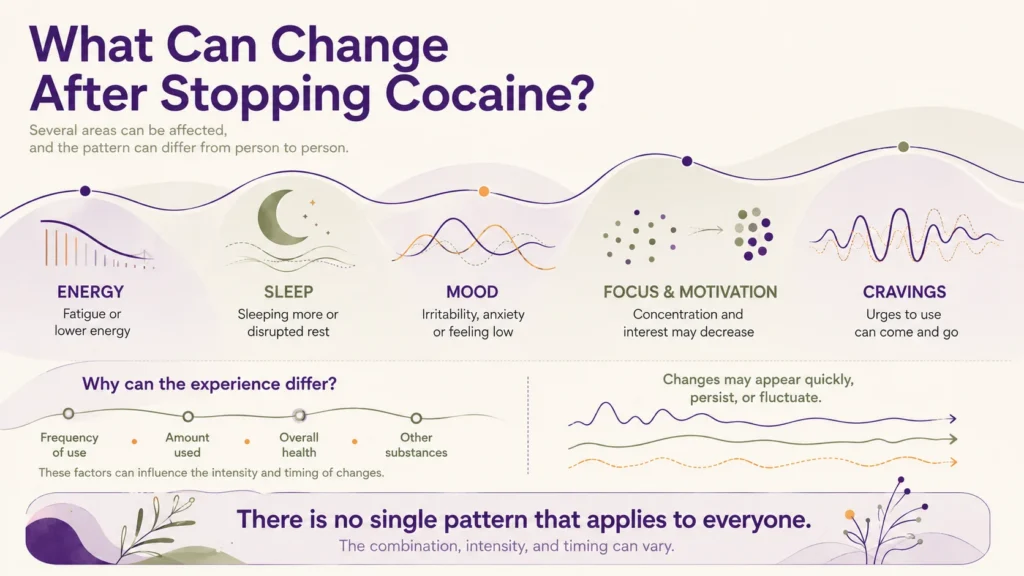
Stopping regular or heavy use can lead to changes in how a person feels physically and emotionally. Fatigue, disrupted sleep, mood shifts, difficulty concentrating, and strong cravings are among the effects that may occur as the body and brain adjust.
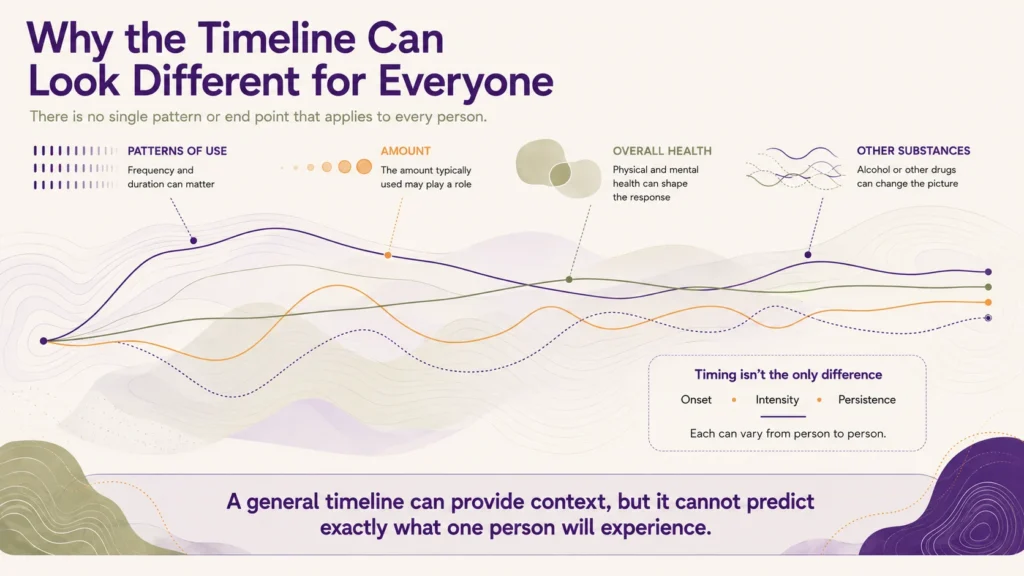
The experience can differ considerably from one person to another. Patterns of use, the amount typically taken, overall health, and the use of alcohol or other substances can all influence what happens during this period. Some changes may appear relatively quickly, while others can persist or fluctuate over time.
Understanding the symptoms that may occur, how they can change, and what can affect the experience provides useful context for recovery and for recognizing when professional guidance may be appropriate.
What Happens When You Stop Using Cocaine?
Repeated use can alter the brain’s reward system, including its response to dopamine, a chemical involved in motivation and feelings of reward. Once the stimulant is no longer present, these processes may take time to stabilize. This can contribute to lower energy, difficulty concentrating, and mood shifts.
Sleep may increase or become disrupted, while activities that once felt enjoyable can temporarily seem less rewarding. Cravings may also emerge, particularly when a person encounters situations or emotions previously associated with taking the drug.
For someone experiencing cocaine addiction, these difficulties can make stopping and remaining abstinent more challenging. How noticeable or persistent they are varies, and health, patterns of use, and other individual factors may all play a role.
What Symptoms Can Occur After Stopping Cocaine?
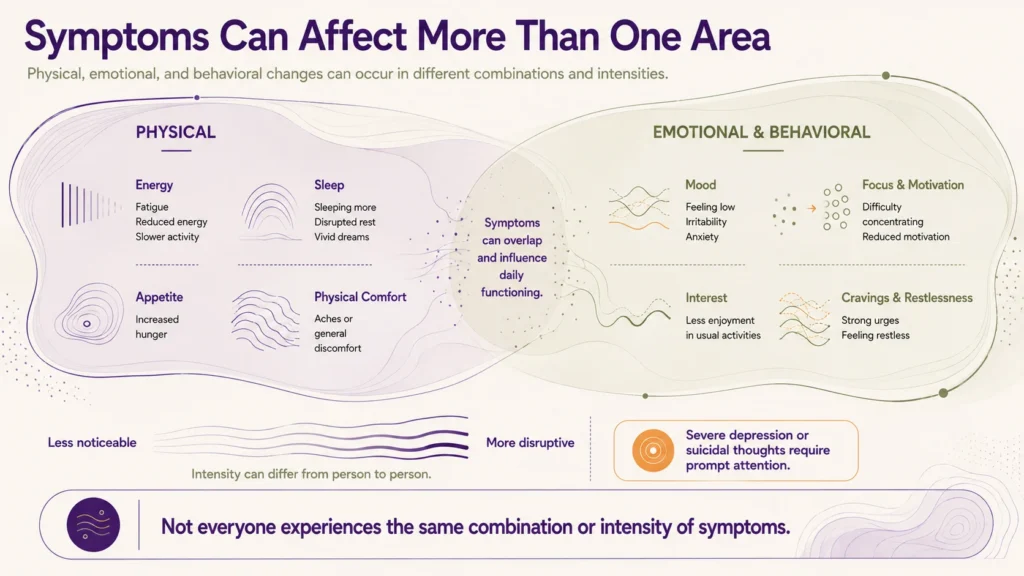
Stopping can bring both physical and emotional symptoms, but their combination and intensity can vary widely. Some may be relatively mild, while others can interfere more noticeably with daily functioning.
Physical Symptoms
Fatigue and reduced energy are common concerns, and some people may sleep more than usual or struggle to maintain their normal sleep pattern. Vivid or unpleasant dreams can occur, along with an increased appetite.
Movement and activity may feel slower, and some people report general aches or discomfort. Unlike withdrawal from certain other substances, the physical response to stopping a stimulant does not always involve prominent outward signs, even when the person feels significantly different.
Emotional and Behavioral Symptoms
Mood and behavior can also be affected. A person may feel irritable, anxious, restless, or unusually low and have trouble concentrating or finding motivation. Activities that are normally enjoyable may temporarily hold less interest, while cravings can create a strong urge to use again.
These difficulties can fluctuate rather than remaining at the same intensity throughout the day. Severe depression, suicidal thoughts, or other immediate mental health concerns require prompt attention.
How Long Do Symptoms Last?
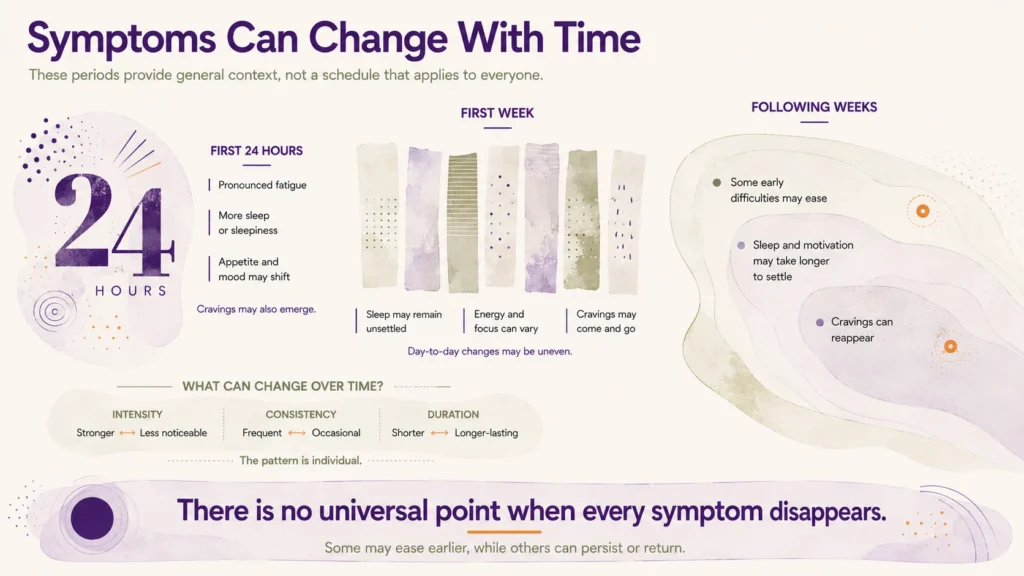
There is no single timetable for how symptoms develop or resolve. Clinical guidance on the course of stimulant withdrawal describes an early period after stopping followed by difficulties that can continue over the days and weeks that follow. Duration and intensity vary, so these stages are a general pattern rather than a fixed schedule.
The First 24 Hours
Changes can begin relatively soon after the drug’s effects wear off. During this early period, pronounced fatigue and a desire to sleep may occur. Appetite can increase, and some people notice irritability, low mood, or a strong urge to use again. How quickly these concerns emerge and how noticeable they become can differ.
The First Week
Over the next several days, sleep may remain disrupted even after the initial tiredness subsides. Energy, concentration, and motivation can also be affected. Emotional difficulties and cravings may come and go rather than steadily improving each day. This means someone may have periods when they feel better followed by times when certain concerns become more noticeable again.
The Following Weeks
Many of the initial physical difficulties may ease with time, but not everything necessarily resolves at once. Some people continue to have disrupted sleep, reduced motivation, low mood, or difficulty finding pleasure in activities they previously enjoyed. Cravings may also recur, particularly in situations associated with past drug use. There is no universal end point, and the time it takes for these concerns to settle can differ considerably between individuals.
Why Does the Experience Vary From Person to Person?
Several factors can shape what happens after someone stops. Frequency and duration of use, the amount typically taken, and the way the drug was consumed can all influence the response. Frequency and duration of use, the amount typically taken, and the way the drug was consumed can all influence the response.
Alcohol or other drugs can complicate the picture, particularly if more than one substance is stopped at the same time. Physical health and existing mental health concerns may also shape how this period unfolds.
Previous attempts to stop can provide additional context, but no single factor predicts exactly what will happen. Looking at these circumstances together helps explain why the timing, intensity, and combination of difficulties can differ considerably between two people.
Can You Detox From Cocaine at Home?
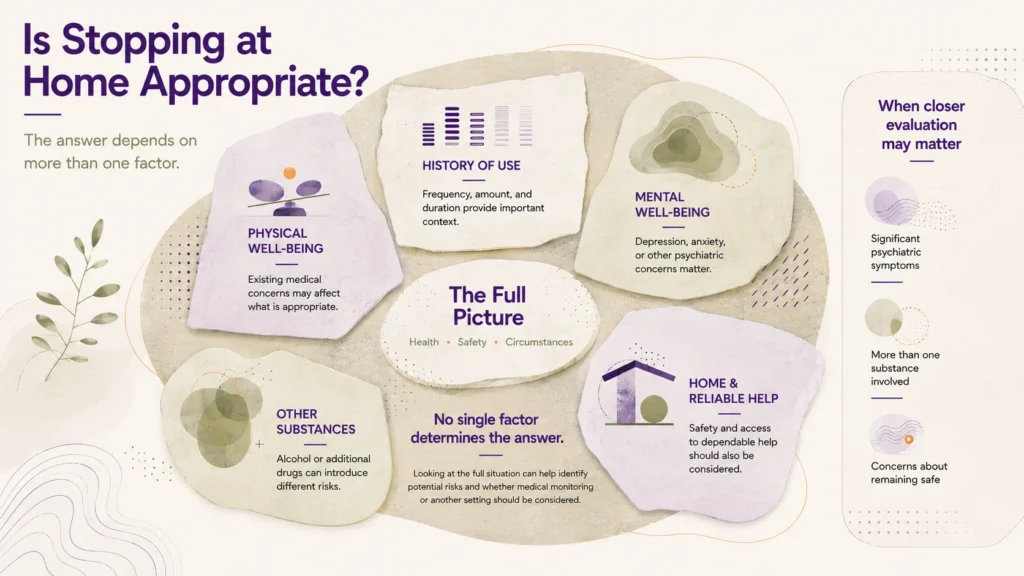
Some people may try to stop at home, but whether this is suitable depends on the broader situation. A person’s physical condition, history of use, mental well-being, other substances involved, and access to reliable help can all be relevant.
Rather than assuming the same approach will work for everyone, reviewing the full situation can help identify potential risks and whether medical monitoring or a different setting may be appropriate. Decisions about this early period can then account for the person’s overall well-being, safety, and immediate situation.
Rather than assuming the same approach will work for everyone, an assessment can identify potential risks and whether medical monitoring or a different setting may be appropriate. Decisions about this early period can then take account of the person’s overall well-being, safety, and immediate situation.
When Should You Seek Professional Help?
Several situations may signal that you need additional help. These include severe depression, persistent cravings, repeated returns to drug use, or difficulty managing work, relationships, and other daily responsibilities. Significant anxiety, paranoia, or an unstable home environment may also make it harder to navigate this period safely.
Using alcohol, opioids, or other substances at the same time can introduce additional complications, making it important to consider the full picture rather than one drug in isolation.
Certain serious effects of cocaine use can require immediate medical attention. Anyone experiencing a medical emergency, suicidal thoughts with an immediate risk of self-harm, or other life-threatening symptoms should call 911 or go to the nearest emergency department.
What to Expect After the First Few Weeks
Feeling better physically does not always mean every challenge has passed. Cravings can return unexpectedly, particularly around people, places, emotions, or routines associated with previous drug use. Sleep and motivation may also take additional time to become more consistent.
As everyday routines resume, recognizing triggers and finding different ways to manage stress can help build greater stability. Counseling or other ongoing resources may provide practical strategies for handling these situations. When emotional or psychiatric needs are also present, understanding how mental health and addiction treatment can work together provides useful context for addressing both areas rather than viewing them as separate issues.
Finding the Right Type of Care
What comes next depends on more than how long it’s been since someone stopped using. Ongoing cravings, emotional well-being, other substance use, home stability, and the ability to manage daily responsibilities can all help shape which setting is appropriate.
Some people may need more structure, while others can continue living at home and attend scheduled counseling and other services. These needs can also change over time rather than remaining fixed.
Friends and family may have questions about their role during this period. Learning about supporting someone in recovery can provide useful context for remaining involved while maintaining appropriate boundaries.