


Group counseling brings individuals together in a clinically facilitated setting to examine concerns related to alcohol or drug use. A qualified professional guides conversations, introduces relevant material, and helps participants explore different perspectives.
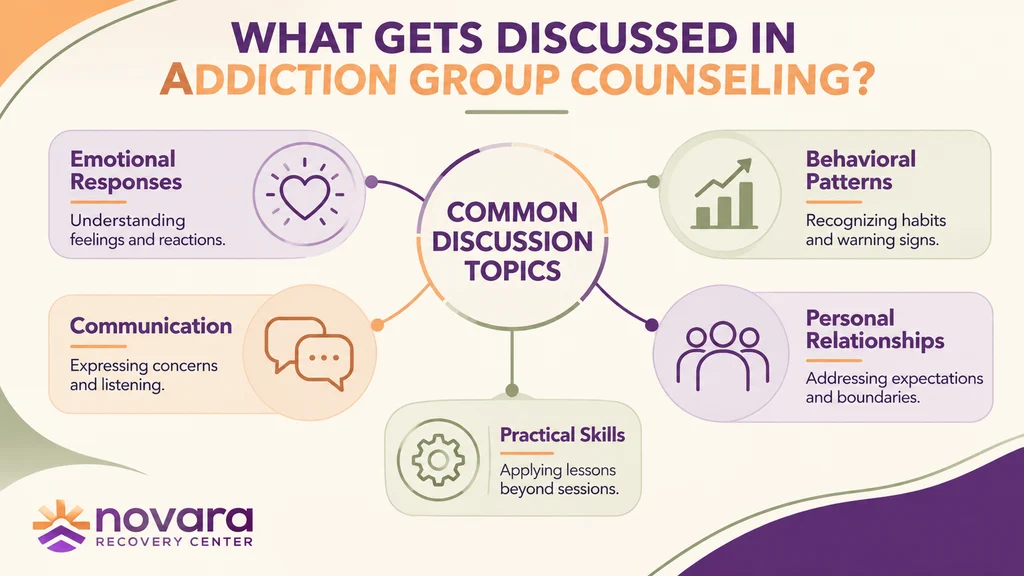
Sessions may address emotional responses, personal relationships, behavioral patterns, and practical skills that can be applied outside treatment. Discussions can also provide opportunities to consider how certain decisions affect everyday responsibilities and interactions with others.
The subjects covered depend on the program’s therapeutic approach, the composition of the group, and participants’ clinical goals. Each session is intended to contribute to broader treatment objectives.
How Discussion Subjects Are Chosen
The material covered in counseling sessions follows clinical objectives rather than a fixed list of questions. Professionals consider the purpose of each meeting, the participants involved, and the concerns being addressed.
The Role of the Facilitator
A qualified clinician introduces subjects, encourages constructive participation, and establishes expectations for respectful interaction. This includes guiding conversations when disagreements arise and maintaining appropriate boundaries around sensitive information.
Facilitators may also introduce educational material or exercises designed to examine particular behaviors. Their responsibilities extend beyond leading conversations to keeping activities aligned with the intended therapeutic purpose.
Matching Activities to Treatment Goals
Session content may differ according to the program’s clinical approach, the composition of the group, and the stage of care.
Some meetings emphasize understanding personal experiences, while others concentrate on communication or practical decision-making. Unlike informal peer-support meetings, clinical group counseling operates within a defined treatment structure under professional supervision. When substance use and psychiatric concerns overlap, mental health and addiction treatment may need to be coordinated as part of a broader care plan.
Recognizing Patterns Behind Substance Use
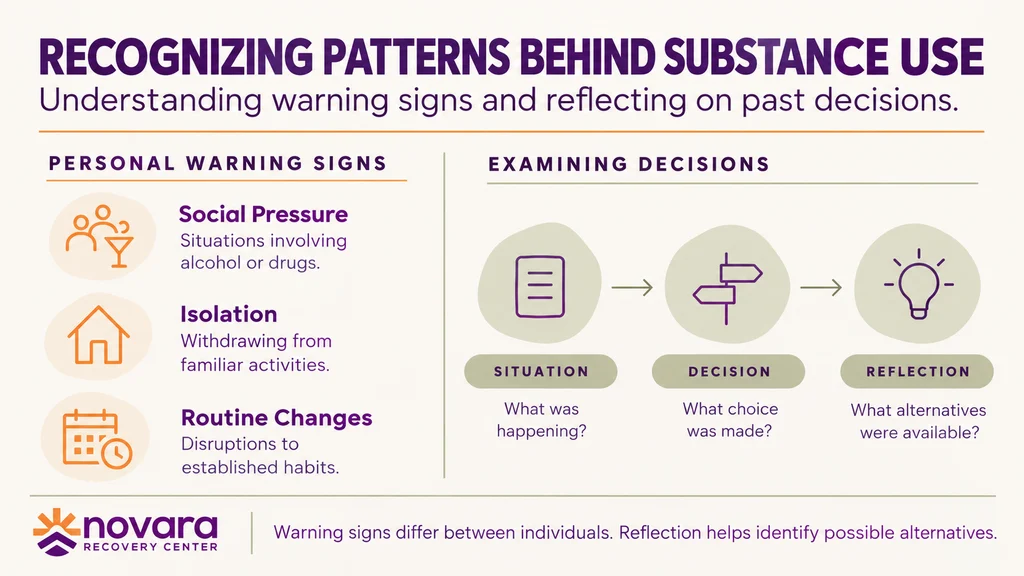
Examining past experiences can help people understand circumstances that have influenced their alcohol or drug use. In a counseling group, these conversations may reveal similarities between experiences while allowing room for individual differences.
Identifying Personal Warning Signs
Participants may discuss situations associated with increased cravings, such as social pressure, isolation, or disruptions to familiar routines. A study published in JAMA Psychiatry examined the association between drug-related cues and cravings and subsequent substance use or relapse.
The purpose is to recognize circumstances that deserve attention, rather than assume every difficult experience will lead to substance use. What matters for one individual may have little significance for another.
Examining Decisions and Consequences
Guided conversations can explore how particular choices developed and what followed. For example, someone might describe accepting an invitation to a gathering where alcohol was readily available, then consider the circumstances surrounding that decision.
Hearing different perspectives may help reveal options that were overlooked at the time. These discussions should encourage reflection without assigning blame or treating past behavior as a measure of personal character.
The emphasis remains on understanding how decisions unfold and considering alternatives for similar situations.
Managing Emotions and Everyday Pressures
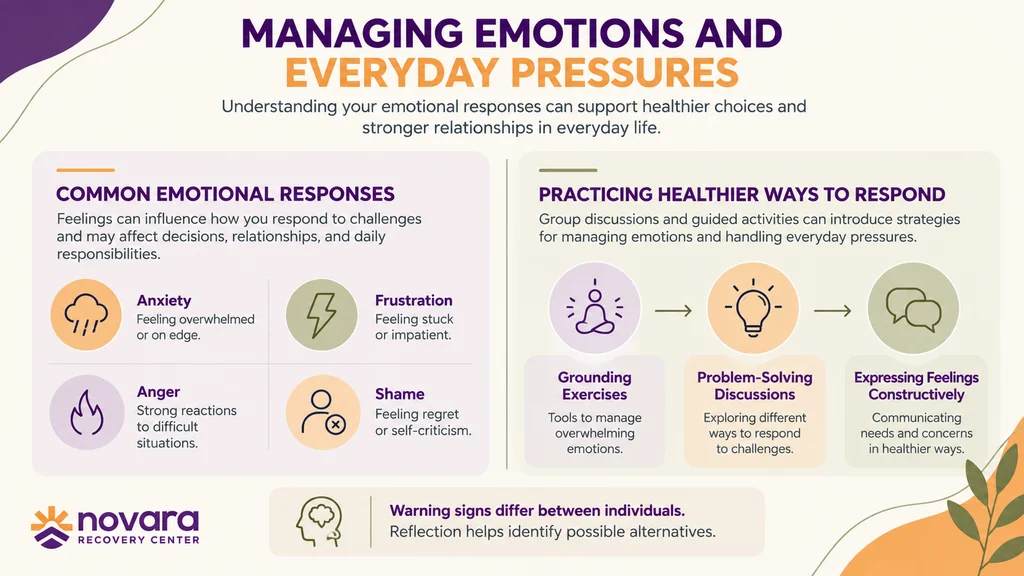
Emotional concerns are another area commonly explored during addiction counseling. Guided conversations can help individuals examine how their reactions influence decisions, relationships, and daily responsibilities.
Understanding Emotional Responses
Feelings such as anxiety, frustration, anger, or shame may affect how someone responds to challenging circumstances. A systematic review and meta-analysis published in Addiction examined the association between difficulties regulating emotions and substance use disorders. Group members might examine situations where these reactions became difficult to handle or contributed to impulsive decisions.
The emphasis is on recognizing emotional experiences without assuming that everyone responds in the same way.
Practicing Healthier Ways to Respond
Facilitated activities may introduce grounding exercises, problem-solving discussions, or methods for expressing difficult feelings constructively.
For example, a clinician might present a hypothetical disagreement and invite members to consider different ways of responding before examining the possible outcomes.
These exercises provide opportunities to explore alternatives in a supervised setting. Their suitability depends on the therapeutic approach, individual circumstances, and clinical objectives.
Persistent or worsening symptoms may require separate assessment rather than relying exclusively on group-based activities.
Communication, Relationships, and Boundaries
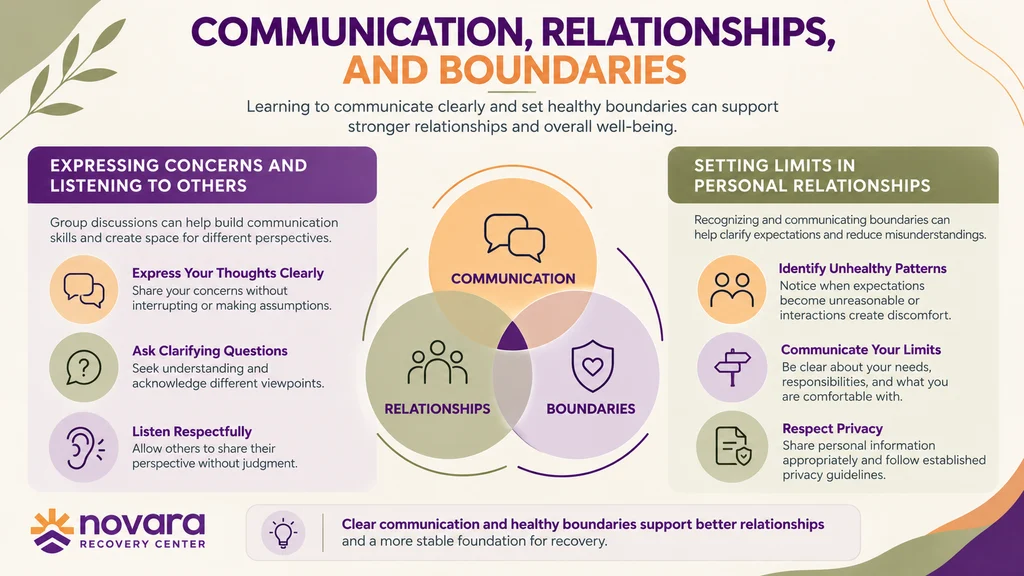
Interactions with others can affect personal well-being and participation in treatment. Counseling sessions offer opportunities to develop clearer ways of expressing concerns, listening attentively, and establishing expectations.
Expressing Concerns and Listening to Others
Participants may practice explaining their thoughts without interrupting or making assumptions about another person’s intentions. Exercises can focus on asking clarifying questions, acknowledging differing viewpoints, and communicating disagreements respectfully.
For example, a role-playing activity might involve addressing a missed commitment with a friend. The emphasis would be on expressing concerns directly while allowing the other person an opportunity to respond.
Setting Limits in Personal Relationships
Another subject involves recognizing when expectations become unreasonable or certain interactions create discomfort. Learning to communicate limits can help clarify responsibilities and reduce misunderstandings.
These skills differ from family therapy for addiction, which directly involves relatives in the therapeutic process.
Sensitive information should be handled according to established privacy guidelines, with personal disclosure appropriate to each person’s circumstances.
Practical Exercises Used During Sessions
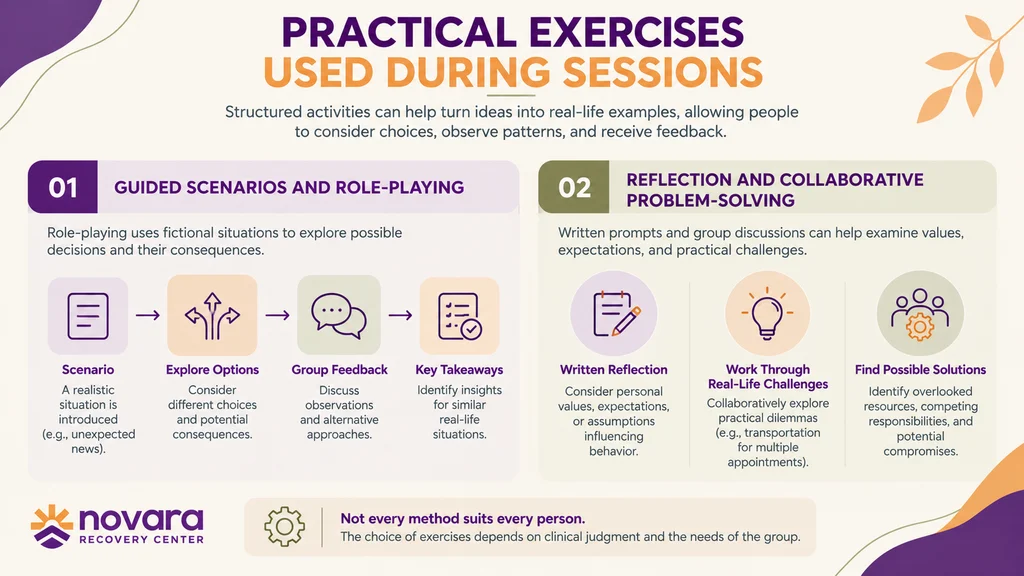
Alongside guided conversations, some counseling groups incorporate structured tasks that turn abstract concepts into concrete examples. These methods allow people to consider choices, observe behavioral habits, and receive feedback.
Guided Scenarios and Role-Playing
Role-playing involves acting out a fictional situation to explore possible decisions and their consequences.
For example, a scenario might involve someone receiving unexpected news that disrupts their plans for the week. The exercise could focus on evaluating immediate priorities, weighing available options, and deciding what requires attention first.
Afterward, the clinician may invite observations about the choices made, including alternatives that were not initially considered. Professional guidance helps keep the activity relevant to its intended purpose.
Reflection and Collaborative Problem-Solving
Written prompts may encourage individuals to examine personal values, expectations, or assumptions influencing their behavior.
Another approach involves presenting a practical dilemma, such as arranging transportation when several appointments fall on the same day. Working through possible solutions can highlight overlooked resources, competing responsibilities, and potential compromises.
Not every format suits every person. The selection of methods depends on clinical judgment and the needs of those attending.
Preparing for Challenges Outside Treatment
The situations people encounter between appointments can raise questions that are difficult to anticipate. Counseling groups may address how to carry lessons from sessions into ordinary routines and responsibilities.
Discussing Situations Beyond the Counseling Room
Returning to work, attending family gatherings, or adjusting to a new schedule can introduce competing demands. Conversations might focus on planning around appointments, managing time, or deciding which responsibilities require immediate attention.
For example, someone starting a new job may need to consider how changing work hours affect existing commitments. Examining practical constraints beforehand can make those decisions easier to approach.
Connecting Session Insights to Daily Decisions
Ideas introduced during counseling can be revisited after someone has tried applying them outside the meeting.
A person might describe what happened when they adjusted a routine, what proved difficult, and whether another approach would be more practical.
Within a group therapy program, these follow-up conversations can help connect therapeutic work with everyday choices.