

Withdrawal symptoms can develop when someone with alcohol dependence suddenly stops or significantly reduces consumption. Over time, the brain and nervous system adapt to the presence of alcohol, making it more difficult for the body to adjust when drinking stops.
The resulting physical and psychological changes can range from mild discomfort to serious medical complications. Their severity depends on factors such as drinking patterns, general health, and previous experiences after stopping alcohol.
Because every situation is different, understanding what influences symptom severity is an important part of identifying appropriate medical care and determining the safest next steps for individuals living with long-term drinking problems.
Why the Body Responds After Stopping Alcohol
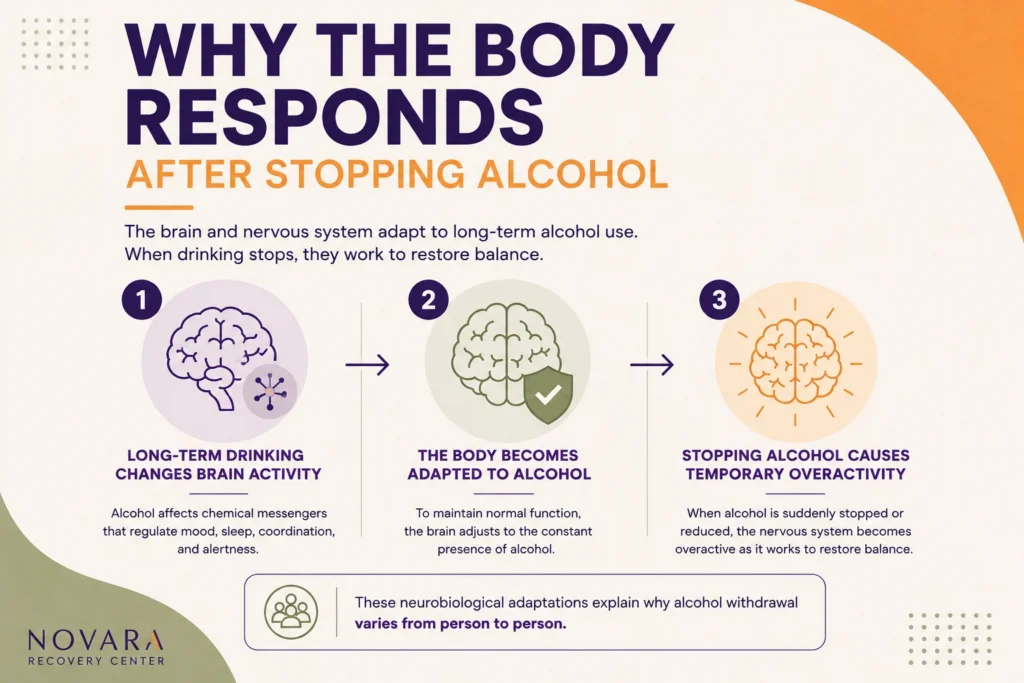
Long-term drinking affects the brain’s communication system by changing the activity of chemical messengers that regulate mood, sleep, coordination, and alertness. Over time, the central nervous system adapts to these changes in an effort to maintain normal function despite the continued presence of alcohol. As this adaptation develops, the body becomes increasingly reliant on those altered patterns of activity.
When drinking suddenly stops or is significantly reduced, the brain cannot immediately return to its previous state. Instead, the central nervous system temporarily becomes overactive as it works to restore balance, resulting in a range of physical and cognitive responses. These neurobiological adaptations help explain why the body’s response can vary in both type and severity from one person to another.
When Symptoms Typically Begin and How Long They Last
Timing varies from one person to another, but symptoms often begin within the first several hours to a day after the last drink. For many people, symptoms become most pronounced during the first two to three days before gradually easing.
Milder physical symptoms frequently improve within roughly four to five days, though this is not a fixed timeline. More serious complications, including seizures and delirium tremens, are more commonly associated with the first few days after drinking stops rather than the initial hours.
Some individuals continue to experience anxiety, sleep disturbance, irritability, or mood changes for weeks after the physical symptoms resolve. These lingering effects are generally addressed through ongoing clinical care rather than short-term monitoring.
Because drinking patterns, health conditions, and prior withdrawal episodes all influence how symptoms develop, timing should not be used to predict severity in any individual case. A medical evaluation is the appropriate way to determine what level of monitoring is needed.
Common Signs and Physical Changes
Early Physical Changes
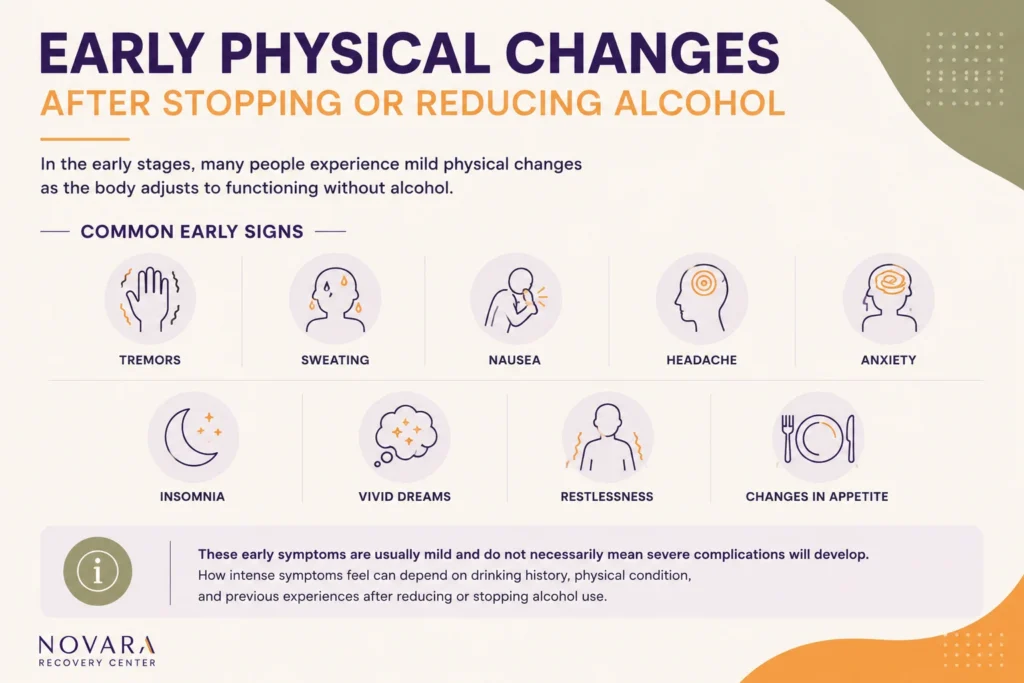
Many people first notice relatively mild physical changes within the early stages after stopping or significantly reducing alcohol consumption. Common symptoms include tremors, sweating, nausea, headache, and feelings of anxiety as the body adjusts to functioning without alcohol. Some individuals also experience insomnia, vivid dreams, restlessness, or changes in appetite during this period. Although these symptoms may be uncomfortable, they do not necessarily indicate that severe complications will develop. Their intensity can vary based on factors such as drinking history, overall physical condition, and previous experiences after reducing or stopping alcohol use.
More Serious Medical Concerns
As the body’s response becomes more pronounced, some individuals may develop symptoms that require prompt clinical evaluation. These can include an elevated heart rate, significant increases in blood pressure, confusion, hallucinations, or seizures. Not everyone experiences these complications, and their presence does not follow a predictable pattern.
Factors such as the duration and amount of alcohol consumed, previous episodes involving severe symptoms, underlying health conditions, and overall physical health can all influence severity. This helps explain why these changes can progress quickly in some situations; recognizing worsening symptoms is an essential part of determining when a higher level of medical care may be appropriate.
Understanding Delirium Tremens (DTs)
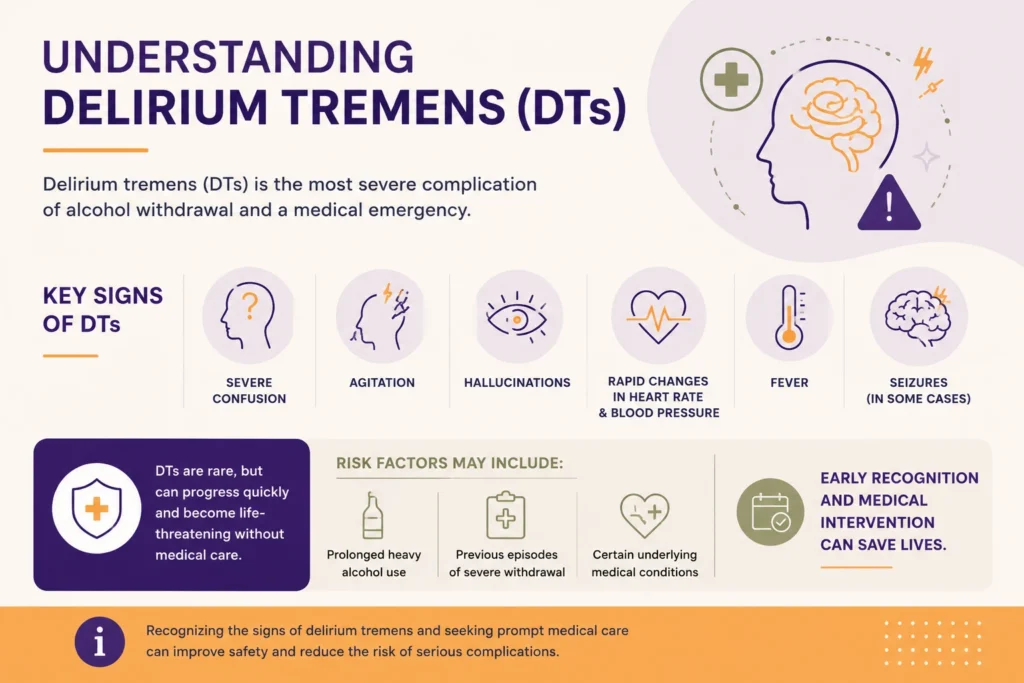
Delirium tremens (DTs) is the most severe complication associated with alcohol withdrawal and is considered a medical emergency. The condition is characterized by severe confusion, agitation, hallucinations, rapid changes in heart rate and blood pressure, fever, and, in some cases, seizures.
Although delirium tremens affects only a small percentage of individuals experiencing alcohol withdrawal, it can progress quickly and lead to life-threatening complications without a professional evaluation.
Factors such as prolonged heavy alcohol use, previous episodes of severe withdrawal, and certain underlying conditions may increase the risk. Recognizing the signs of delirium tremens is important, as early medical intervention can improve safety and reduce the likelihood of serious complications.
What Can Influence Severity
Not everyone experiences alcohol withdrawal in the same way. Several risk factors help explain why symptoms differ in both type and intensity. Ongoing drinking patterns, the amount typically consumed, and previous episodes of alcohol withdrawal syndrome can all affect a person’s clinical presentation.
Existing health conditions also play a key role. Chronic illnesses, prescription medications, nutritional deficiencies, and reduced liver function may influence how the brain and nervous system adapt after alcohol use ends. Age can also contribute, as older adults are more likely to have underlying clinical concerns.
Behavioral health is another critical consideration. Anxiety, depression, PTSD, and other co-occurring disorders can occur alongside alcohol use and may affect both physical and psychological symptoms. Looking at these factors together provides a more complete picture and helps support informed evaluation.
When Medical Evaluation Becomes Important
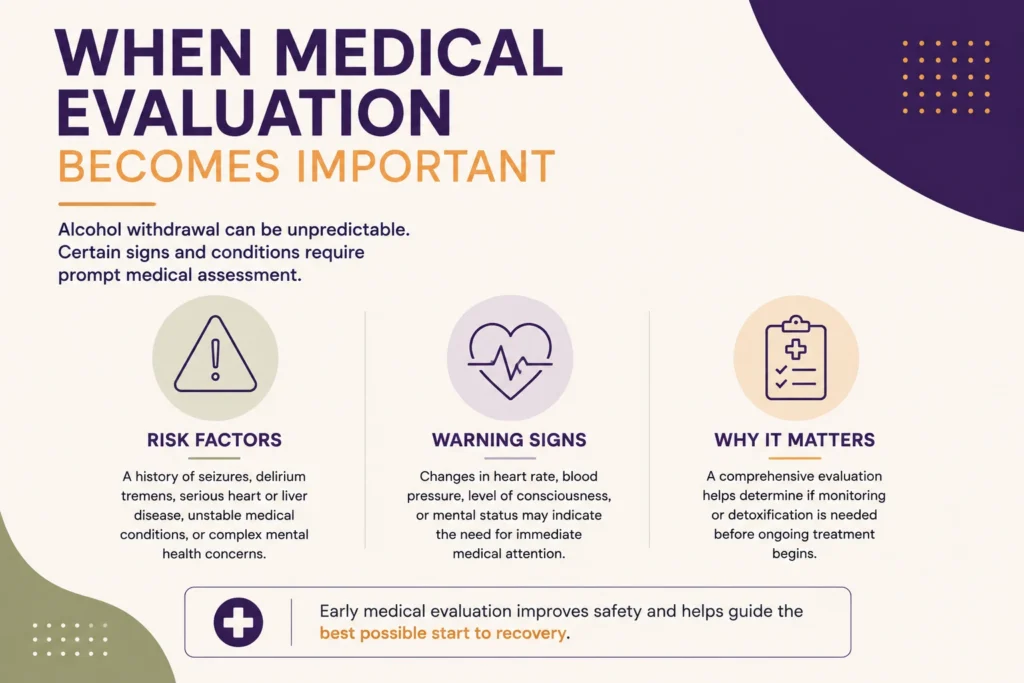
Certain signs and underlying health conditions need quick assessment because serious complications can develop during alcohol withdrawal. Individuals with a history of seizures, delirium tremens, significant heart or liver disease, or other unstable medical conditions often require careful evaluation before stopping alcohol use.
Mental health conditions, including severe depression, suicidal thoughts, psychosis, or other complex psychiatric concerns, can also increase the need for additional support during this period.
Because alcohol withdrawal syndrome can progress differently from one person to another, symptom severity should never be judged by appearance alone. Changes in heart rate, blood pressure, level of consciousness, or mental status help explain that additional attention is needed.
A comprehensive evaluation helps determine whether monitoring in a healthcare setting is appropriate and whether referral for detoxification as part of the treatment process should be considered before beginning ongoing treatment.
Moving Beyond the Initial Physical Effects
The physical effects of stopping alcohol represent only one stage of the recovery process. Once immediate health safety concerns have been addressed, attention often shifts toward understanding the factors that contributed to problematic drinking and developing strategies to support lasting change. Individual counseling, group therapy, family involvement, and other evidence-based approaches can help strengthen coping skills, improve emotional well-being, and address patterns that are more likely to contribute to future long-term drinking.
Long-term progress depends on consistent support after the initial stabilization period. Ongoing therapeutic services, structured follow-up, and relapse prevention planning can help individuals build healthy routines while responding to new challenges as they arise. Learning more about treatment for alcohol-related concerns provides additional context about the range of services that support continued progress beyond the initial stages of care.
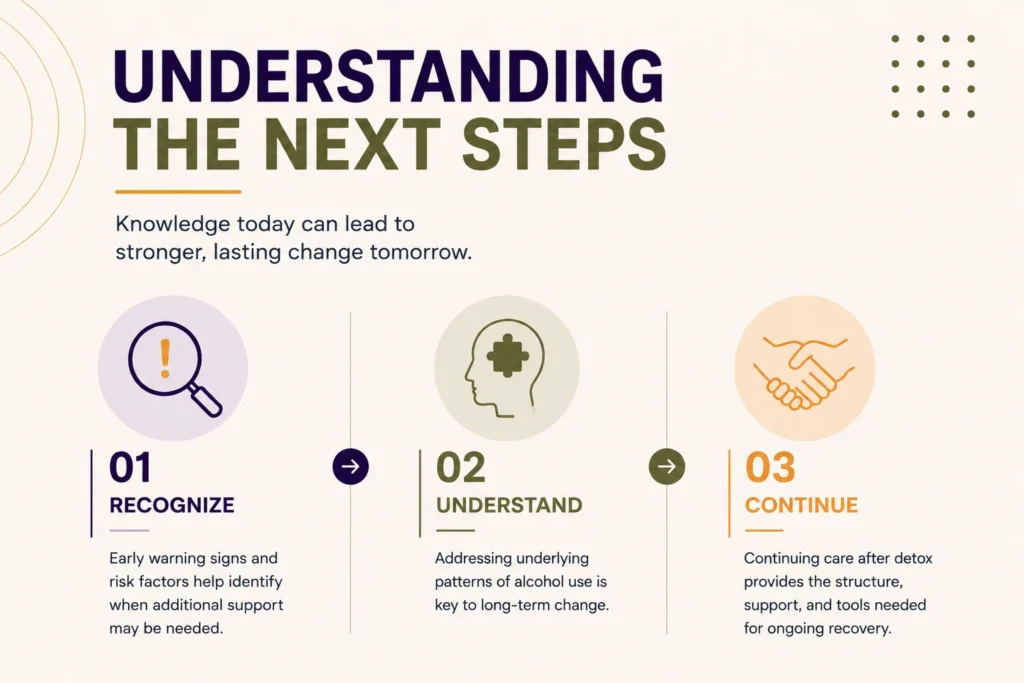
Understanding the Next Steps
Recognizing early warning signs and understanding the factors that contribute to more serious complications can help individuals make informed decisions about their health. While the physical effects of stopping drinking patterns are an important consideration, long-term progress often depends on addressing the underlying patterns associated with alcohol use and building strategies that support lasting change. Learning more about continuing care after alcohol detox provides additional insight into how support and treatment evolves following the initial stabilization period.