

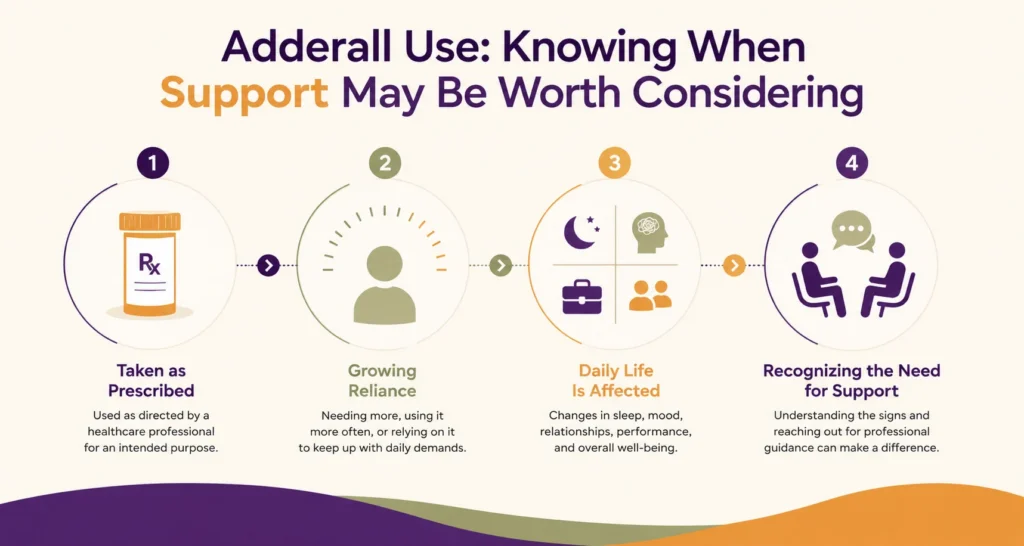
Adderall can be helpful when taken as prescribed, but its stimulant effects can also make misuse difficult to recognize or control. Someone may begin taking larger amounts, using it more often than directed, or relying on it to manage work, school, energy, or everyday responsibilities. Over time, those patterns can affect sleep, mood, relationships, and daily life.
Adderall addiction treatment can take different forms depending on how the medication is being used, a person’s overall health, and whether other substance use or mental health concerns are involved. Understanding the warning signs and available support options can make it easier to decide when professional help may be worth considering.
When Adderall Use Becomes Hard to Control
Taking Adderall as prescribed is different from using it in ways that were not intended by the prescribing provider. The FDA has highlighted the risks associated with misuse of prescription stimulants, including addiction and overdose. Concerns can develop when someone begins taking larger amounts, using doses more frequently, or taking Adderall without a prescription. In other cases, a person may start relying on medication to get through long workdays, study, stay awake, or balance everyday responsibilities.
These cycles do not look the same for everyone. What matters is whether Adderall use is becoming increasingly difficult to navigate or is beginning to interfere with daily life.
Signs That Extra Support May Be Worth Considering
A person might notice that they are thinking about Adderall more often, running out of their medication early, or repeatedly taking more than they planned. They may feel unable to work, study, or complete normal tasks without it.
Other concerns can include changes in sleep, mood, relationships, or responsibilities at home, work, or school. Someone may also recognize that their use is causing problems but find that cutting back is harder than expected. When these behaviors continue or become more disruptive, talking with a healthcare professional can help clarify what support may be appropriate.
What Can Happen When Someone Cuts Back?
Reducing or stopping Adderall after frequent or prolonged use can lead to a period of adjustment. Experiences with amphetamine withdrawal vary from person to person and may depend on factors such as how much was being taken, how often it was used, and how long the pattern continued.
Some people experience significant fatigue or changes in their usual sleep patterns. Appetite may increase, and concentrating on work, school, or routine tasks can feel more difficult for a time. Mood changes can also occur, including irritability, feeling down, or having less motivation than usual. Cravings for stimulants may make cutting back more challenging.
These effects can be uncomfortable, but their intensity and duration vary from person to person. Other medications, substance use, physical health, and mental health can also influence what a person experiences.
Why Individual Circumstances Matter
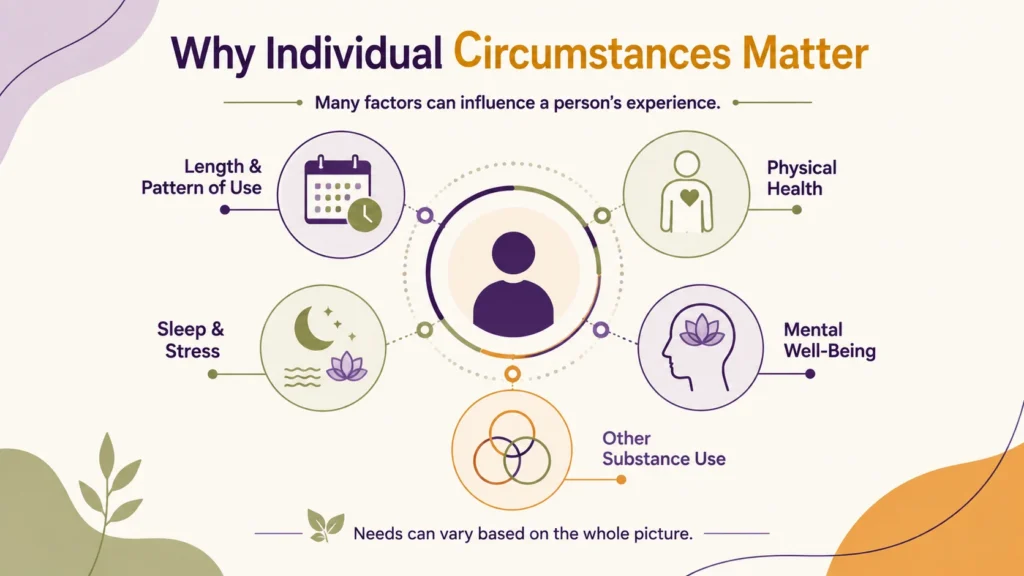
The experience of cutting back can vary depending on how long someone has used Adderall, how often they take it, and how much they typically use. Taking other substances may also affect how a person feels during this period. Physical health, sleep, stress, and existing mental health concerns can play a role as well.
Because these factors can overlap, symptoms alone may not clearly show what someone needs. A healthcare professional can consider substance use, health history, mental well-being, and everyday circumstances together when discussing possible next steps.
The amount of structure a person needs can also vary. Different forms of support for stimulant use may be considered based on the challenges someone is experiencing and how those challenges are affecting daily life. This allows care decisions to reflect the individual rather than relying on a single symptom or pattern of use.
How Recovery From Problematic Adderall Use Can Work
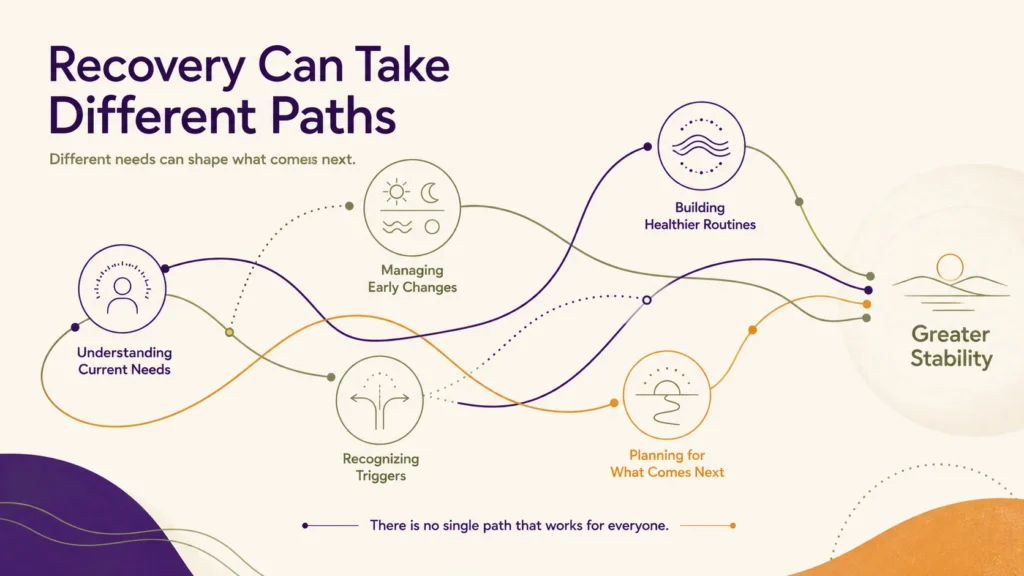
No single path works for everyone. A useful starting point is understanding how Adderall is being used, how it is affecting daily life, and whether physical health, mental health, or other substance use needs to be considered. An initial assessment can bring these factors together and help determine the appropriate level of care.
Early on, attention may focus on changes in sleep, energy, mood, concentration, or cravings as the body adjusts. Counseling and behavioral approaches can then help identify situations, emotions, or routines connected to stimulant use. This can include recognizing triggers, finding different ways to cope with stress, and developing strategies for work, school, or other situations where Adderall previously played a role.
Healthier routines can also provide greater stability. Regular sleep, balanced meals, physical activity, and realistic daily expectations can make it easier to establish new habits. If alcohol or other drugs are also being used, those concerns may need to be considered as part of the broader picture.
Looking beyond the earliest stages is important as well. This can involve recognizing situations that increase the urge to use, maintaining supportive relationships, continuing counseling when appropriate, and preparing for setbacks. Rather than following a fixed path, the approach can change over time as a person’s circumstances, challenges, and needs evolve.
Choosing the Right Level of Support
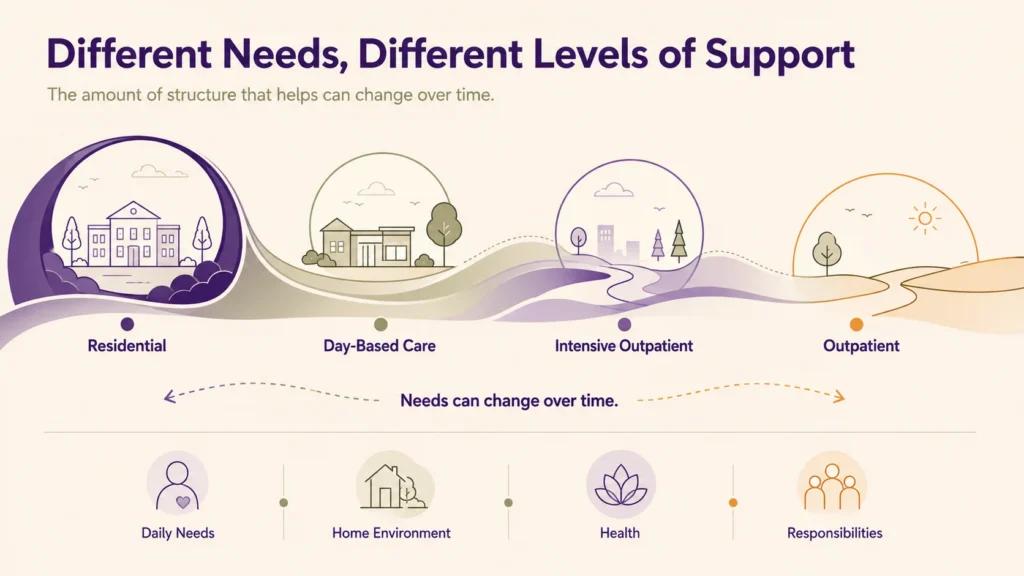
What works for one person may not provide enough guidance or flexibility for another. Factors such as the frequency of stimulant use, difficulty cutting back, living environment, physical and mental health, and use of other substances can all influence what makes sense at a particular point in recovery.
For some, a residential setting offers distance from routines or situations connected to substance use and more consistency throughout the day. Different levels of care offer varying amounts of structure. Some options allow a person to continue living at home while attending day-based programming, which can provide consistency without requiring an overnight stay.
Intensive outpatient options can include scheduled counseling and recovery-focused activities while leaving more time for work, school, or family responsibilities. As greater stability develops, less intensive options may become appropriate.
Needs can also change over time. Someone who initially benefits from a more structured environment may eventually transition to an approach that allows for greater independence. Counseling, healthy routines, and connections with supportive people can remain important during these changes. Rather than viewing one setting as the right choice for everyone, decisions should reflect a person’s current circumstances, responsibilities, and progress.
What to Look for When Considering Professional Help
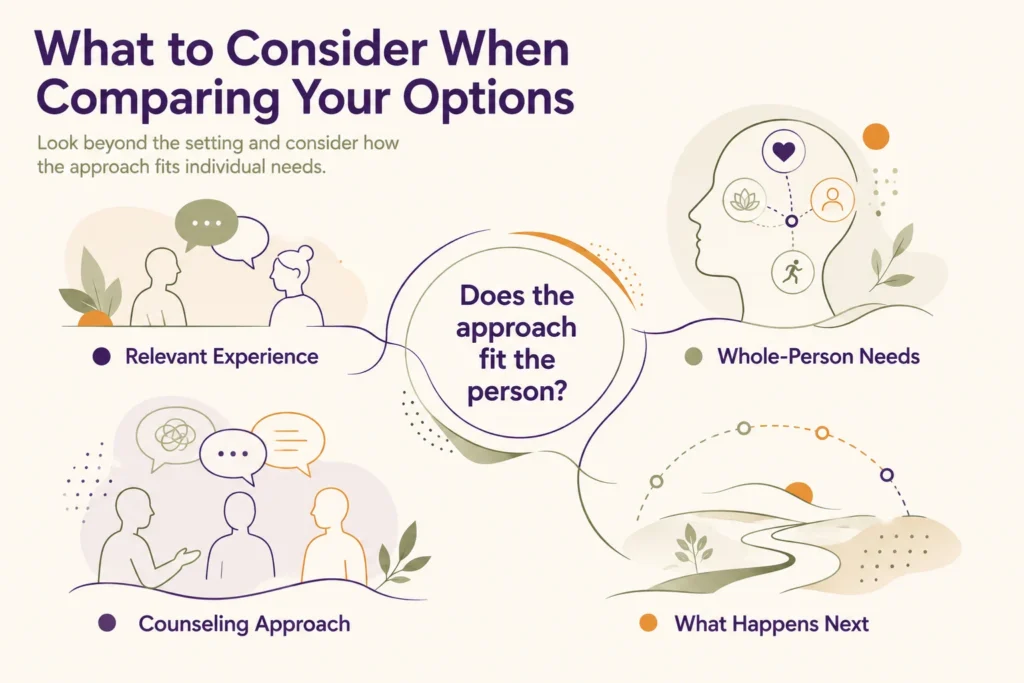
When comparing options, it can help to look beyond the name of a service or setting and think about how well the approach fits the person’s circumstances. There are several factors to consider when choosing a rehab center, including whether the provider has experience addressing prescription stimulant misuse and how they determine the amount of structure someone may need.
Mental health is another consideration. ADHD, anxiety, depression, or other concerns can affect substance use and may need attention at the same time. Understanding how these needs are assessed and whether they can be addressed alongside concerns involving Adderall or other substances can help clarify what a particular setting offers.
The type of counseling available can matter, too. Learning about behavioral approaches, individual or group sessions, and ways to recognize triggers can clarify what day-to-day care involves.
Finally, look at what happens as circumstances change. Progress often continues beyond the earliest phase, so information about transitions, ongoing counseling, and resources for maintaining stability can better explain the broader approach than focusing only on the first stage.