

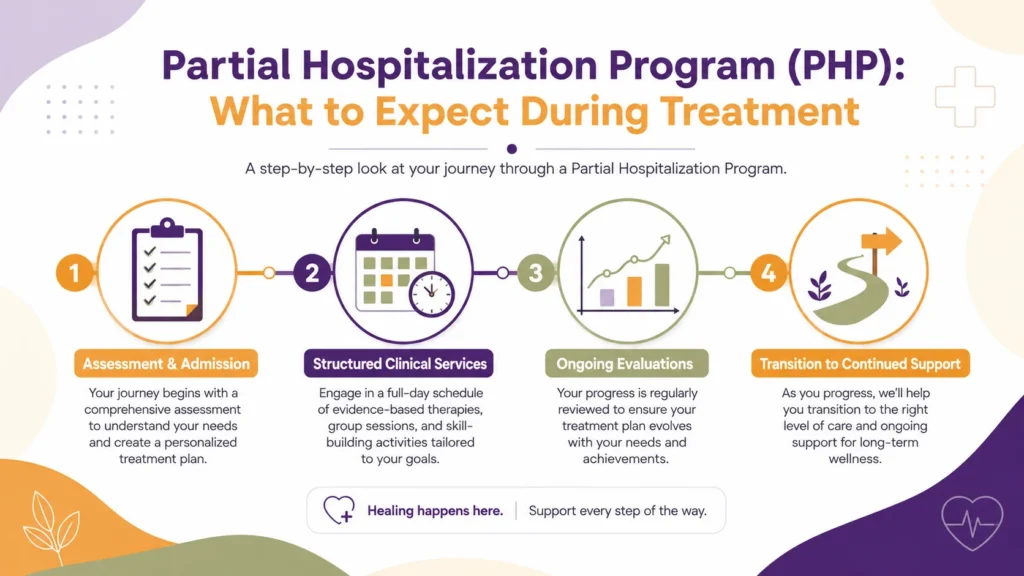
Beginning addiction care often raises questions about what each day will involve and whether this level of support is the right fit. A Partial Hospitalization Program (PHP) provides a structured schedule with comprehensive clinical services while allowing many participants to return home at the end of the day. Understanding how the program is organized can help reduce uncertainty and make the transition into care feel more manageable.
This guide explains what to expect before the first day, what a typical schedule may include, how progress is evaluated, and what the next steps often look like after completing the program. Gaining a clear understanding of the process can help individuals and their loved ones make informed decisions about addiction care.
What Is This Level of Care?
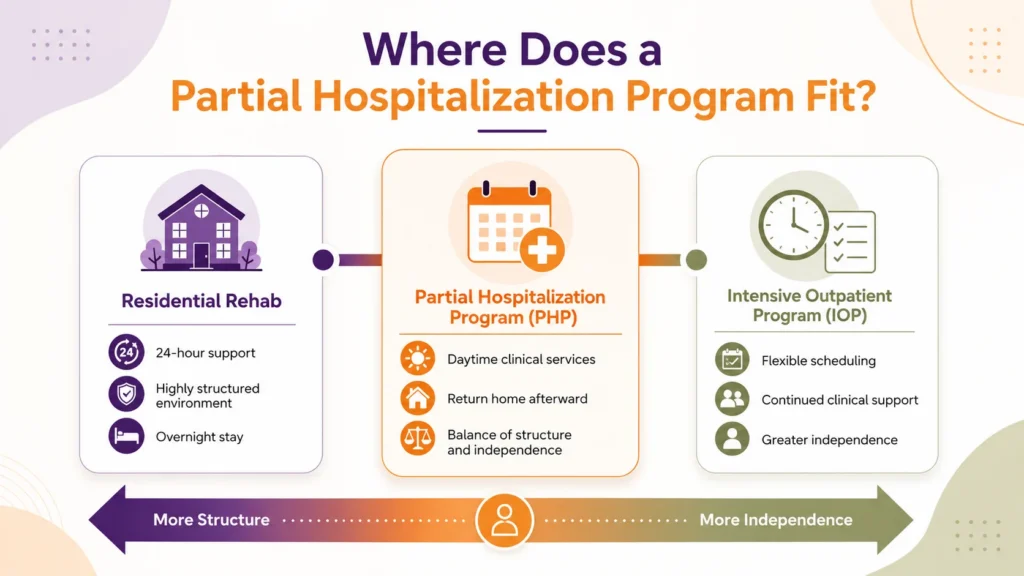
A Partial Hospitalization Program (PHP) is an intensive form of outpatient addiction care designed for people who need more support than traditional outpatient services but do not require 24-hour supervision. Participants receive comprehensive clinical care during the day and typically return home or to a supportive living environment afterward, allowing them to begin applying newly developed skills in everyday situations.
This option sits between residential rehab and an intensive outpatient program (IOP), offering a balance of structured clinical services and personal independence. It is often recommended for those transitioning from inpatient care or for individuals whose symptoms can be safely managed without an overnight stay.
Because every person’s circumstances are different, the frequency of services and clinical recommendations are tailored to individual needs. The structure, duration, and clinical recommendations can vary based on individual needs, but understanding how partial hospitalization works can help clarify where it fits within the continuum of addiction care.
What Happens Before the First Day?
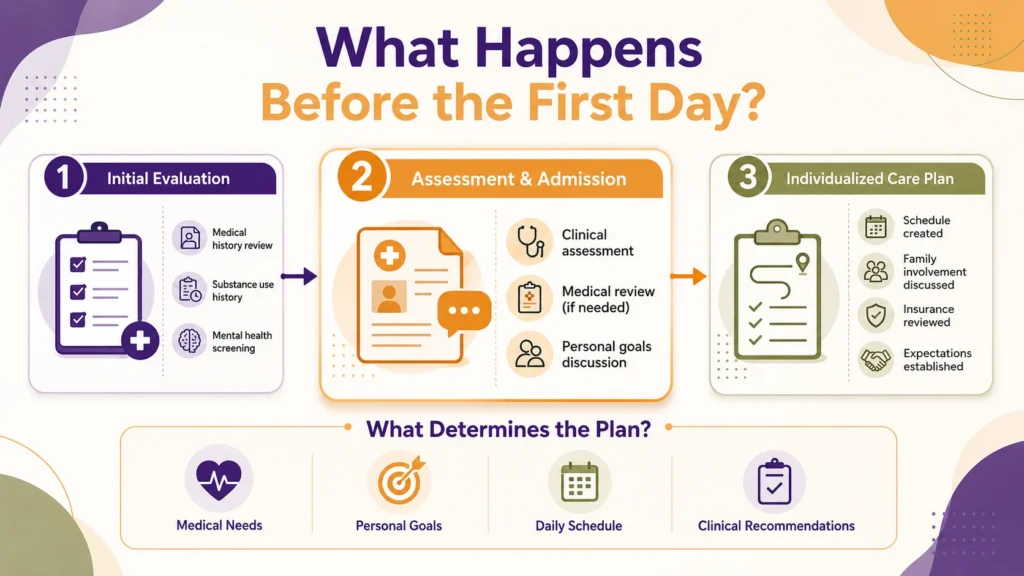
Before participating in a structured outpatient setting, most providers complete an initial evaluation to determine the appropriate level of care. This process typically includes a review of medical history, substance use, mental health concerns, and other factors that may influence clinical recommendations.
Assessment and Admission
The first appointment often includes a clinical assessment, a medical review if needed, and a discussion about current challenges, previous care experiences, and personal goals. This information helps establish a clear starting point and identify the most appropriate next steps.
Building an Individualized Care Plan
Using the assessment findings, clinicians develop a personalized plan based on each person’s strengths, needs, and priorities. Topics such as scheduling, family involvement, insurance, and ongoing expectations are commonly discussed before participation begins. Admission requirements may vary depending on the provider and individual circumstances.
What Does a Typical Day Look Like?
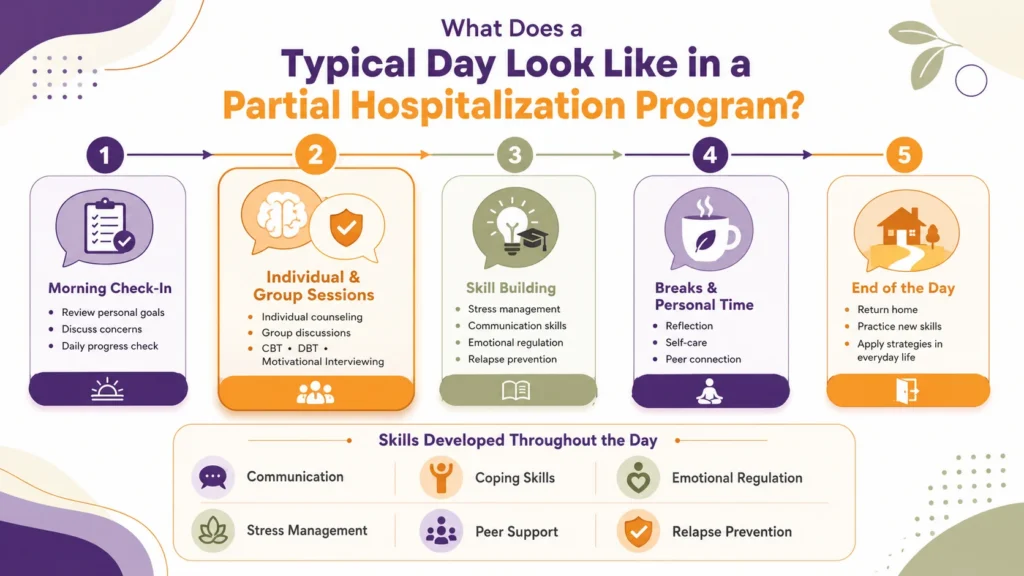
While daily schedules vary, most structured outpatient programs follow a consistent routine that combines clinical support, education, and opportunities to build practical skills. This balanced approach helps create stability while encouraging continued progress in a supportive environment.
Morning Check-Ins
The day often begins with a brief check-in where participants can discuss how they are feeling, identify any immediate concerns, and review personal goals. These conversations also help clinicians monitor progress and determine whether any adjustments are needed.
Individual and Group Sessions
A typical schedule includes both individual counseling and group sessions. Individual meetings provide time to address personal challenges, while group discussions encourage peer connection, accountability, and shared learning. Evidence-based approaches, such as cognitive behavioral therapy (CBT), dialectical behavior therapy (DBT), and motivational interviewing, may be incorporated based on individual needs.
Skill Building and Education
Educational sessions focus on developing healthy coping strategies that support long-term well-being. Common topics include stress management, emotional regulation, communication skills, relapse prevention, and recognizing situations that may increase the risk of returning to substance use. The goal is to help participants build confidence as they navigate everyday challenges.
Breaks and Personal Time
Scheduled breaks provide opportunities to reflect on new concepts, practice self-care, and build connections with others. Developing a strong support network is often an important part of long-term wellness, and Virginia’s recovery support services include peer-based and community resources that complement formal addiction services.
How Progress Is Monitored Throughout the Program
Progress is reviewed regularly to ensure the care plan continues to reflect each person’s needs. These check-ins allow providers to evaluate how someone is responding, discuss challenges, and adjust goals as circumstances change. Decisions about continuing or changing the level of care are commonly guided by the ASAM Criteria following ongoing clinical assessment.
Medication management may be incorporated when needed, particularly for individuals with co-occurring mental health conditions or those who benefit from medications that support long-term wellness. Family involvement may also be encouraged to strengthen communication, reinforce healthy routines, and build a supportive home environment.
As important milestones are reached, planning begins for the next step, whether that involves transitioning to a less intensive level of support or continuing with outpatient services.
What Happens After Completing This Level of Care?
Completing a structured outpatient program is an important milestone, but ongoing support often plays a key role in maintaining long-term progress. As stability increases, many individuals transition to an Intensive Outpatient Program (IOP), where they can continue building healthy habits while balancing work, school, or family responsibilities.
Others may move into traditional outpatient services, peer support groups, or community-based resources that align with their needs and long-term goals. Continuing care plans often include relapse prevention strategies, ongoing mental health support, and regular check-ins to help reinforce progress over time. This gradual transition allows individuals to apply the skills they’ve developed while maintaining access to professional guidance when needed.