


Finding a rehab center feels overwhelming given the number of treatment options available throughout Northern Virginia. From medical detox and residential treatment to outpatient programs and ongoing recovery support, each level of care serves a different purpose. While many facilities offer similar services at first glance, important differences exist in treatment approaches, staff credentials, program structure, and aftercare planning. Understanding these differences helps individuals and families evaluate programs more effectively and identify the level of care that aligns with their needs. A thoughtful evaluation of treatment options creates a stronger foundation for recovery, continued support, and long-term stability.
Start With the Appropriate Level of Care
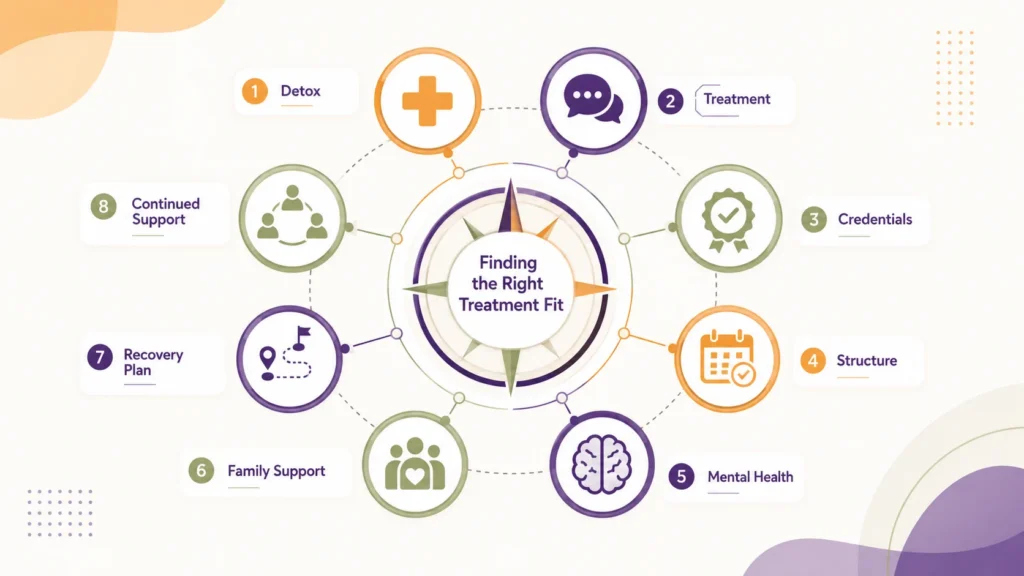
One of the first steps in choosing a rehab center involves identifying the level of care that matches current treatment needs. A better understanding of substance use disorders provides important context when comparing treatment programs, treatment approaches, and recovery goals.
For some individuals, treatment begins with medical detox. Alcohol and drug withdrawal can create physical and psychological symptoms that require monitoring and support before ongoing treatment begins. Detox focuses on stabilization and prepares individuals for the next phase of care.
Following detox, treatment recommendations vary based on clinical needs, substance use history, and recovery objectives. Some individuals benefit from a structured residential environment, while others enter outpatient programs that allow them to continue meeting their responsibilities at home, at work, or at school.
A quality rehab center offers more than a single treatment option. Programs that provide access to detox, residential treatment, outpatient care, and recovery planning create a clear path through each stage of treatment. Understanding how these services work together makes it easier to evaluate rehab centers and identify programs that align with individual recovery needs.
Not Every Rehab Center Offers the Same Services
Understanding What Programs Actually Provide
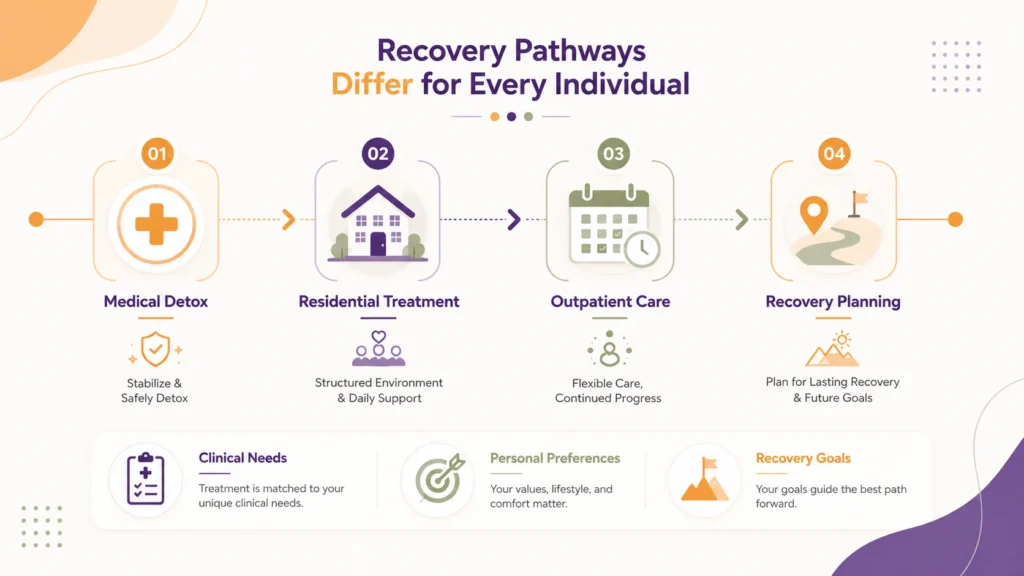
Many rehab centers offer addiction treatment, but the services available vary from one provider to another. Some programs focus on a single stage of recovery, while others support individuals through multiple phases of treatment.
A rehab center that offers detox, residential treatment, PHP, IOP, and outpatient care provides greater continuity throughout the recovery process. This structure allows treatment to evolve as needs change without requiring a transition to a different provider.
When comparing programs, it is important to look beyond service lists and understand how care is delivered. Clinical oversight, individualized treatment planning, family involvement, and recovery support all shape the treatment experience.
Reviewing a provider’s treatment programs and services offers a clearer picture of how care progresses from admission through ongoing recovery support.
Questions to Ask Before Calling a Rehab Center
What Families Often Want to Know
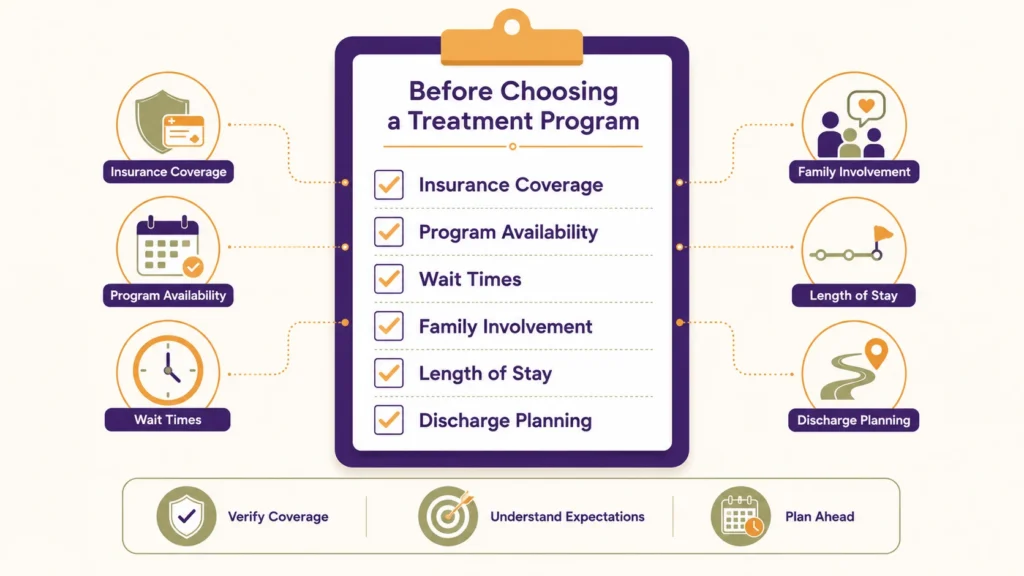
Reviewing a provider’s admissions process provides valuable insight into what to expect before treatment begins, including insurance verification, eligibility requirements, and next steps.
Insurance coverage, program availability, and expected wait times are common topics during the admissions process. Understanding these details creates a clearer picture of available treatment options and helps establish realistic expectations.
Family communication is another important consideration. Treatment programs differ in how they involve family members throughout the recovery process, including educational opportunities, therapy participation, and progress updates.
Length of stay and discharge planning also deserve attention. A clear plan outlines the next stage of care, identifies ongoing support resources, and provides direction after treatment concludes.
Why Mental Health Support Matters
Looking Beyond Substance Use Alone
Substance use rarely develops in isolation. Many individuals entering treatment also face challenges such as stress, anxiety, depression, trauma, or emotional burnout. These experiences affect daily life and influence the recovery process.
A rehab center’s approach to mental health provides valuable insight into the scope of its treatment services. Programs that address emotional health alongside substance use take a more comprehensive approach to recovery and focus on the factors contributing to substance use over time.
Mental health support may include individual therapy, group counseling, psychiatric care, and trauma-informed treatment approaches. State resources related to substance use services for individuals and families in Virginia also emphasize the connection between mental health and substance use. When evaluating treatment options, it is important to understand how these services are integrated throughout the treatment experience.

Recovery Doesn’t End After Treatment
The Importance of Long-Term Support
Completing a treatment program marks an important step in the recovery process, but recovery continues beyond discharge. The transition back to daily life introduces new responsibilities, routines, and challenges that require ongoing support.
Recovery planning creates structure after treatment and establishes clear next steps. This process identifies personal goals, support networks, coping strategies, and resources that support continued progress.
Strong support systems also contribute to long-term recovery. Family members, peer support groups, and recovery communities provide connection, accountability, and encouragement throughout the recovery journey.
Relapse prevention remains an important part of maintaining progress. Recognizing triggers, building healthy routines, and staying connected to supportive resources strengthen long-term stability and reinforce recovery goals.
Choosing a Rehab Center That Feels Like the Right Fit
Selecting a rehab center involves more than comparing services and treatment options. The overall experience matters just as much as the programs offered.
Trust, transparency, and communication shape the relationship between a treatment provider, the individual receiving care, and their family. Access to mental health support and treatment resources also helps individuals and families make informed decisions when evaluating care options.
The treatment environment also deserves consideration. Factors such as staff interactions, program culture, family involvement, and available support services contribute to the overall experience and influence how comfortable individuals feel during treatment.
While clinical quality remains essential, trust, communication, and a supportive environment remain important factors when comparing treatment options.