


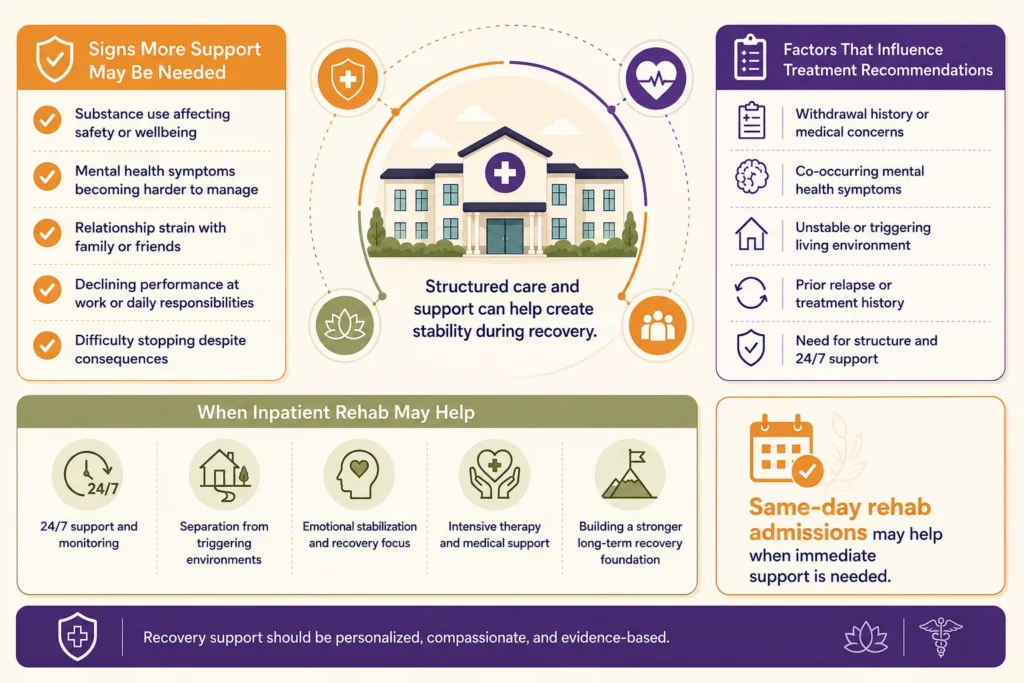
Not everyone struggling with substance use needs the same type of treatment. Some people are able to recover with outpatient support, while others may need a more structured environment with around-the-clock care and separation from daily stressors. Inpatient rehab is often recommended when alcohol or drug use begins affecting personal safety, mental health, relationships, work, or everyday responsibilities.
Questions about the right level of care are common, especially after detox or multiple relapse attempts. Recovery needs can shift over time, and treatment recommendations are often based on factors like withdrawal history, mental health symptoms, living environment, and past treatment experiences. In situations where help is needed quickly, information about same-day rehab admissions may help people better understand what treatment options are available and how the admissions process works.
What Is Inpatient Rehab?
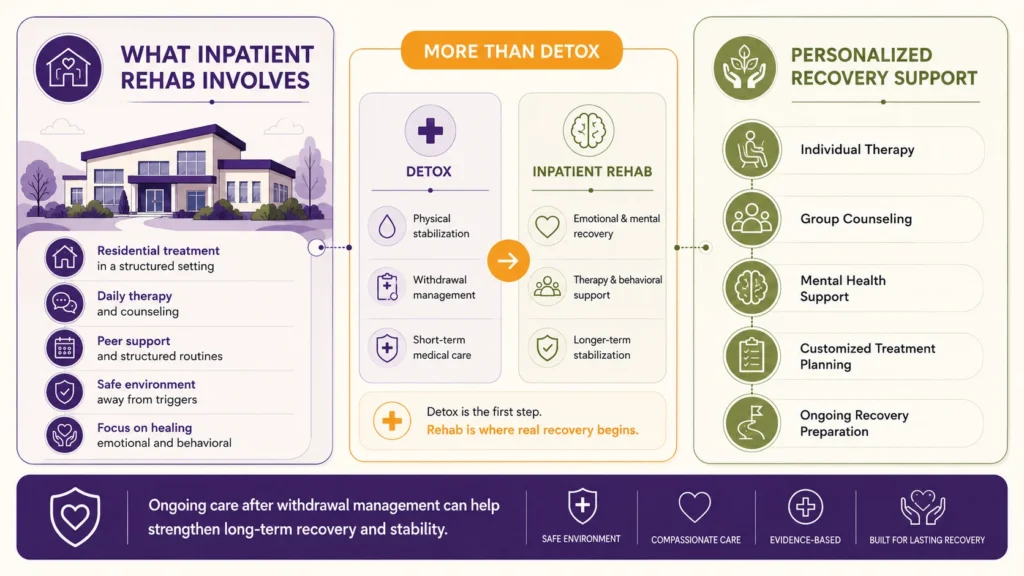
Inpatient rehab is a type of residential treatment where people stay in a supportive, structured environment while focusing on recovery. Days are typically structured around therapy, counseling, peer support, and routines that help restore stability to everyday life. This level of care can be especially helpful for people who need distance from stressful environments, unhealthy patterns, or situations that make substance use harder to manage.
Unlike detox, inpatient rehab is not only focused on the physical side of recovery. Detox helps the body stabilize after alcohol or drug use, while inpatient treatment focuses more on the emotional, behavioral, and mental health factors connected to addiction. Treatment plans are usually adjusted to fit each person’s needs and may include both individual and group support throughout the recovery process.
For people beginning treatment after withdrawal management, understanding the difference between detox and rehab can help clarify why ongoing care is often recommended before returning to daily life.
Signs Inpatient Care May Be the Right Fit
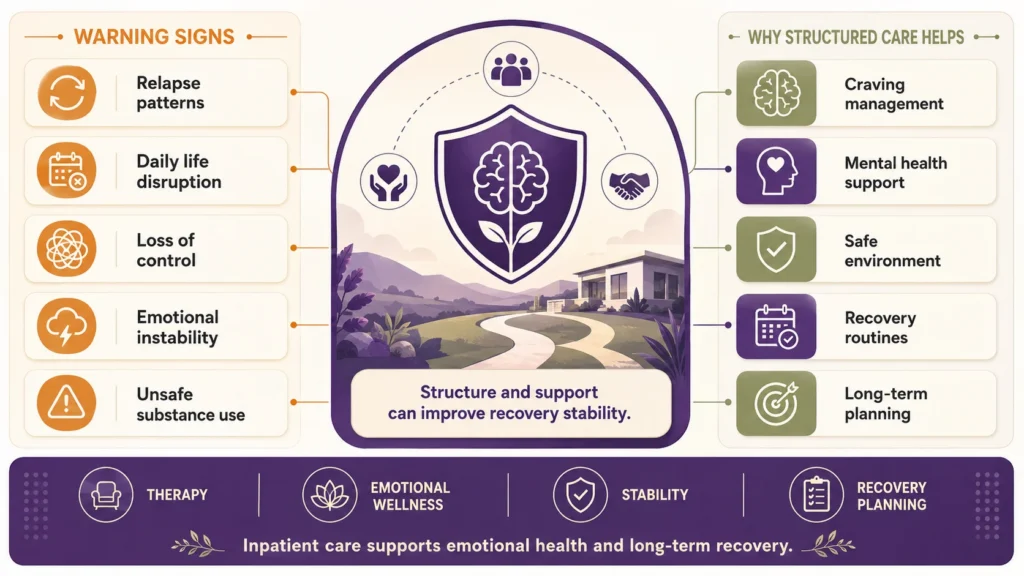
Inpatient rehab is often considered when substance use begins affecting a person’s safety, emotional health, relationships, or ability to function day to day. Repeated relapse, difficulty staying sober outside of treatment, or unsuccessful attempts to quit alone can all point to the need for more structure and support.
A higher level of care may also help when cravings become hard to manage or when withdrawal symptoms make stopping alcohol or drug use feel overwhelming. According to the Cleveland Clinic’s overview of substance use disorder, addiction can affect impulse control, decision-making, and emotional regulation, making recovery more difficult without consistency and stability.
Mental health is another important factor. Anxiety, depression, trauma, and other co-occurring symptoms can increase the risk of relapse when left untreated alongside substance use. In these situations, inpatient care can provide a safer recovery environment while helping people focus on stabilization, coping skills, and longer-term recovery planning.
Understanding Different Levels of Addiction Treatment
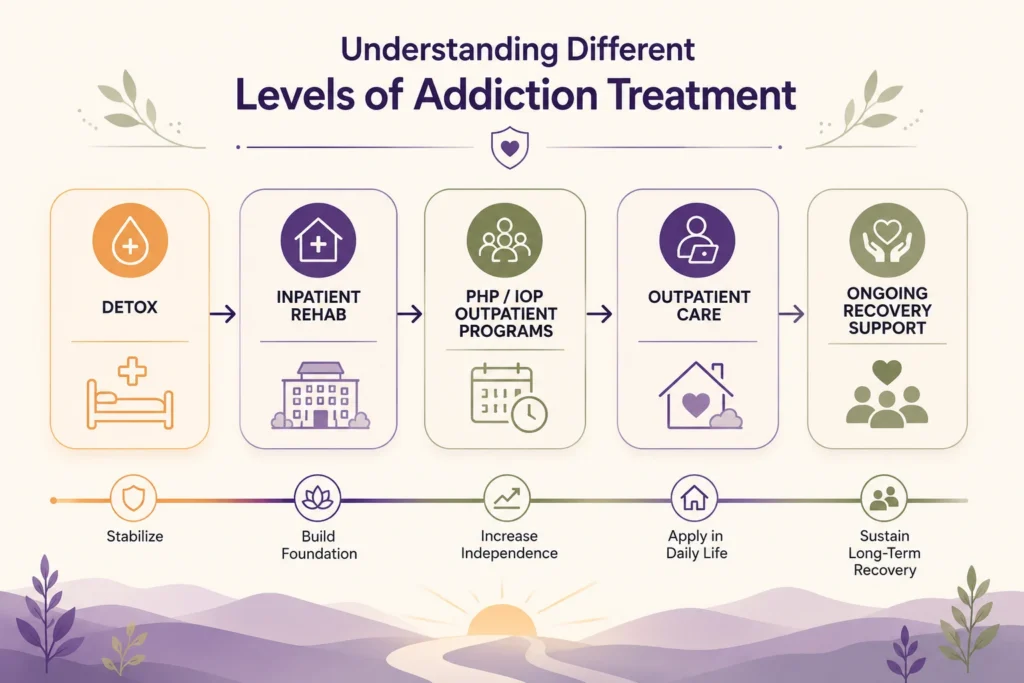
Addiction treatment often involves more than one level of care. As recovery needs change, people may move between programs that offer different amounts of structure, care, and flexibility.
Detox is commonly the first step for people experiencing withdrawal symptoms or physical dependence. After stabilization, inpatient rehab can provide a more structured environment focused on therapy, routine, and recovery resources.
As progress is made, some people transition into intensive outpatient programs or other forms of outpatient care. Partial hospitalization programs (PHP) offer several hours of treatment during the day, while intensive outpatient programs (IOP) provide continued guidance with more flexibility for work, school, or family responsibilities.
Recovery support may also continue after formal treatment through counseling, relapse prevention planning, peer groups, or mental health care. Rather than following the same path, treatment plans are often adjusted over time based on a person’s progress, challenges, and long-term recovery goals.
Mental Health and Recovery Often Overlap
Mental health and substance use are often closely connected. Anxiety, depression, trauma, chronic stress, and other emotional health challenges can affect how people cope, manage relationships, or respond to difficult situations. In some cases, substance use may begin as a way to numb emotional pain or manage overwhelming feelings, which can make recovery more complicated over time.
According to NAMI’s information on substance use disorders, mental health conditions and substance use disorders frequently occur together. When both are present, addressing only one issue may leave important parts of the recovery process untreated.
This is one reason treatment plans are often tailored to the individual rather than focused only on substance use itself. Therapy, emotional support, and trauma-informed care can play an important role in helping people better understand triggers, manage stress, and build healthier coping strategies during recovery.

Things to Consider Before Entering Inpatient Rehab
Choosing a rehab program often involves more than deciding where to receive treatment. Many people also think about the treatment environment, how long they may need help, whether family involvement is encouraged, and what daily life may look like during recovery.
Insurance coverage and admissions timelines are also common concerns, especially for people seeking help during a crisis or after a relapse. In some cases, treatment planning may include transitioning from inpatient care into outpatient support, counseling, or ongoing recovery programs after discharge.
Recovery does not always follow a straight line, and treatment needs can change over time. Having a plan for continued treatment after inpatient rehab can make the transition back into work, school, relationships, and daily responsibilities feel more manageable. Long-term recovery often involves a combination of structure and ongoing attention to both physical and emotional health.
Recovery Support Often Continues After Inpatient Rehab
Inpatient rehab can provide structure and stability during the early stages of recovery, but treatment does not always end after residential care. Many people continue building on that progress through outpatient support, counseling, relapse prevention planning, and ongoing mental health care. Recovery needs can change over time, and continued care often plays an important role in maintaining long-term stability.
For people considering treatment, understanding how detox, inpatient rehab, outpatient care, and aftercare fit together can make the process feel less overwhelming and more manageable.