


Detox and rehabilitation are often discussed together in addiction recovery, but they serve different purposes in the treatment process. Detox focuses on helping the body safely adjust as substances leave the system, which may involve managing withdrawal symptoms and monitoring physical health. Because withdrawal can sometimes involve medical risks, detox is typically completed in specialized medical settings before individuals move forward with ongoing care. According to the Cleveland Clinic, effective treatment for substance use disorder often includes multiple forms of care that address both the physical effects of substance use and the behavioral factors that contribute to addiction.
Rehabilitation, often called rehab, focuses on the psychological and behavioral aspects of recovery. Through therapy, education, and structured support, rehab programs help individuals understand the factors that contribute to substance use and develop strategies that support long-term stability.
What is Medical Detox?
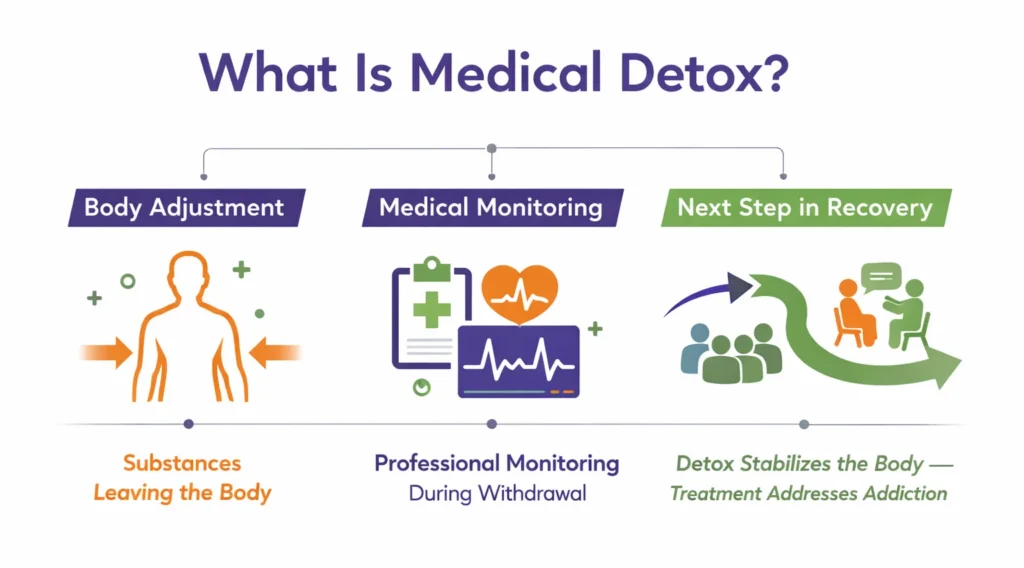
Medical detox refers to the process of allowing alcohol or drugs to leave the body while managing the physical effects that can occur when substance use stops. When someone discontinues certain substances after prolonged use, the body may go through a period of adjustment as it begins to function without them. During this time, individuals may experience symptoms that require monitoring or supportive care.
Because these physical reactions can sometimes involve health risks, detox is often completed in specialized medical detox centers or hospital settings where healthcare professionals can monitor a person’s condition and respond if complications arise. This type of care is commonly associated with substances that can produce significant physical dependence, including alcohol withdrawal, opioid withdrawal, and benzodiazepine withdrawal.
Although detox helps the body stabilize during the early stage of recovery, it is not designed to address the deeper causes of substance use. Detox focuses on stabilizing the body during withdrawal, but it does not address the behavioral patterns that contribute to addiction. For many individuals, continuing care through structured treatment, such as inpatient rehab programs, can provide the therapeutic support needed to begin addressing the psychological and behavioral aspects of recovery.
Understanding Alcohol Withdrawal and Physical Dependence
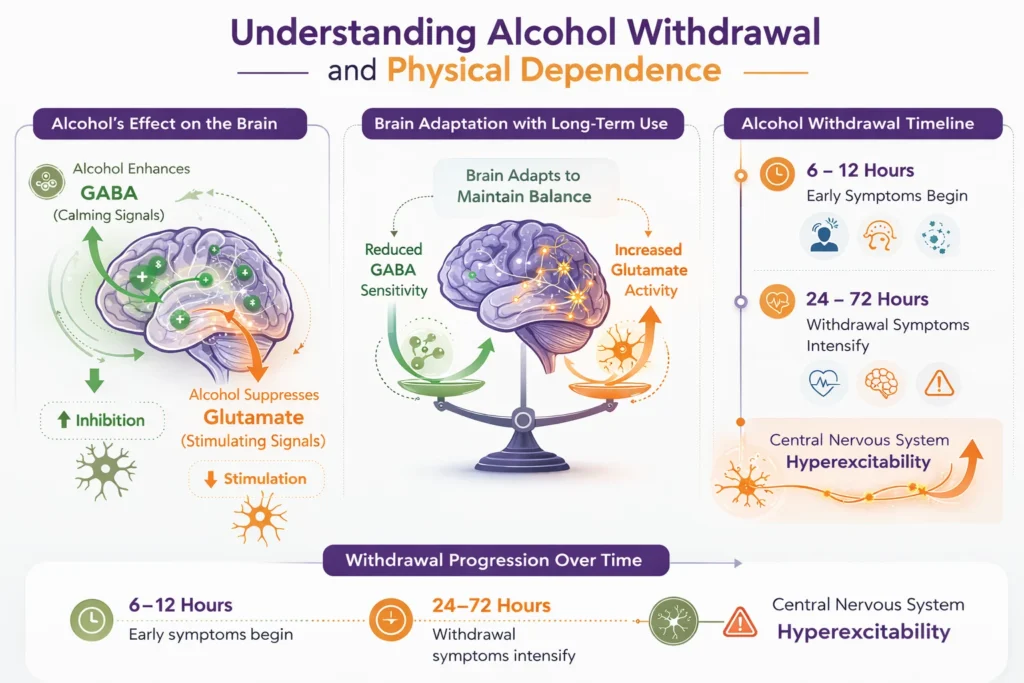
Alcohol withdrawal develops as a result of long-term changes in brain chemistry caused by repeated alcohol exposure. Alcohol acts as a central nervous system depressant that enhances the effects of gamma-aminobutyric acid (GABA), the brain’s primary inhibitory neurotransmitter. At the same time, alcohol suppresses glutamate activity, which normally stimulates nerve signaling. Over time, the brain adapts to these effects by reducing GABA sensitivity and increasing glutamate activity in order to maintain neurological balance.
When alcohol consumption stops suddenly, this adapted system becomes unstable. The brain enters a state of heightened excitability because inhibitory signaling no longer offsets increased glutamate activity. This imbalance produces the neurological overactivity known as alcohol withdrawal syndrome. Clinical research summarized in Alcohol Research: Current Reviews, a peer-reviewed journal supported by the National Institute on Alcohol Abuse and Alcoholism, describes this process as central nervous system hyperexcitability that drives withdrawal symptoms.
Physical dependence develops through prolonged neuroadaptation. Regular heavy alcohol use conditions the brain and body to function in the presence of alcohol. Once dependence forms, abrupt cessation disrupts neurological regulation and produces withdrawal symptoms.
Early symptoms usually appear within six to twelve hours after the last drink and often intensify between twenty-four and seventy-two hours as nervous system hyperactivity increases.
What is Addiction Rehab?
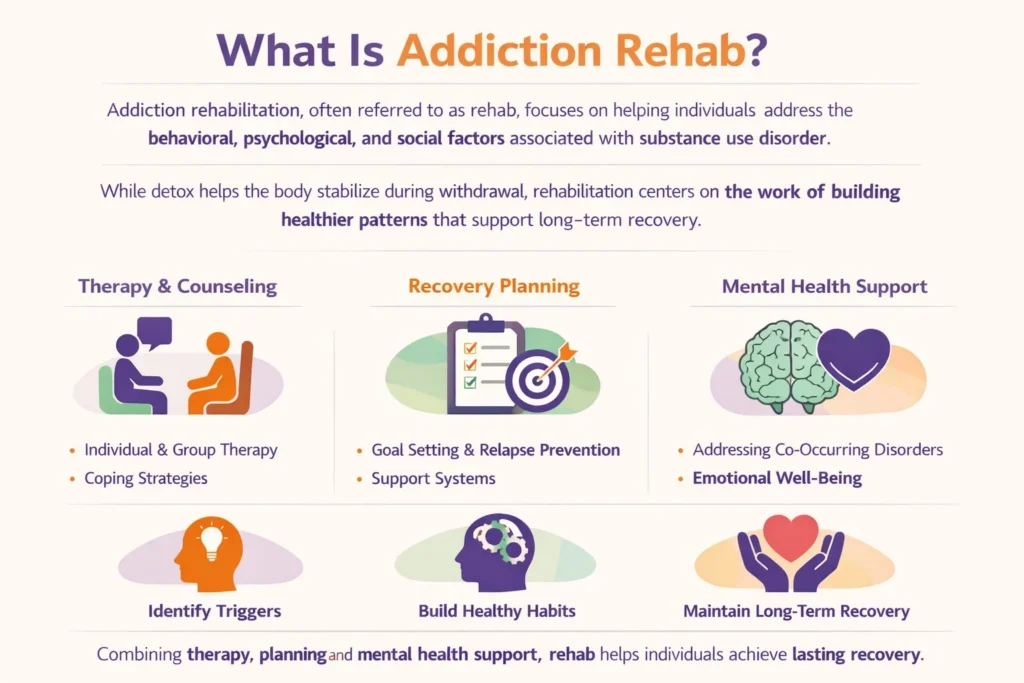
Addiction rehabilitation, often referred to as rehab, focuses on helping individuals address the behavioral, psychological, and social factors associated with substance use disorder. While detox helps the body stabilize during withdrawal, rehabilitation centers on the work of building healthier patterns that support long-term recovery.
Rehab programs typically include a combination of therapy, education, and structured support. Individual and group sessions can help people explore the underlying causes of substance use, recognize triggers, and develop coping strategies that support lasting change. These therapeutic approaches often focus on strengthening decision-making skills, improving emotional regulation, and building healthier routines.
Another important component of rehab is recovery planning. Treatment teams often work with individuals to identify goals, develop relapse prevention strategies, and establish support systems that can continue after formal treatment ends. Many programs also provide mental health support, since substance use disorders frequently occur alongside conditions such as anxiety, depression, or trauma-related concerns.
By addressing both behavioral patterns and emotional well-being, rehab helps individuals develop the skills and support needed to maintain recovery over time.
Types of Rehab Programs
Rehabilitation programs can vary in structure and intensity depending on a person’s needs, health history, and level of support required during recovery. Treatment providers often offer different levels of care to help individuals receive the appropriate support at various stages of the recovery process.
Residential treatment provides a structured environment in which individuals live at the treatment facility and participate in therapy and recovery-focused activities throughout the day. This level of care typically includes a consistent schedule, therapeutic support, and a setting that allows individuals to focus on recovery without many of the distractions or stressors of daily life. Residential programs are often recommended for individuals who may benefit from a higher level of structure and support during treatment.
Outpatient treatment, on the other hand, allows individuals to live at home while attending scheduled therapy sessions during the week. Flexible scheduling can make it easier for people to maintain work, school, or family responsibilities while still receiving professional support. Structured outpatient treatment programs often include individual counseling, group therapy, and recovery education designed to help individuals continue building skills for long-term recovery.
Detox vs Rehab: Understanding the Key Differences
Although detox and rehab are both important parts of the recovery process, they serve different purposes. Detox focuses on helping the body adjust as substances leave the system, while rehab addresses the longer-term work involved in recovery.
| Detox | Rehab |
| Focuses on stabilizing the body during withdrawal | Focuses on recovery, behavioral change, and long-term stability |
| Primarily addresses physical dependence on substances | Addresses psychological, behavioral, and social aspects of addiction |
| Typically, a short-term medical process | Usually involves a longer period of therapeutic support |
| Often occurs before entering a treatment program | Helps individuals develop coping skills and recovery strategies |
Detox addresses physical dependence, while rehab focuses on the psychological, behavioral, and social aspects of recovery.
Do All People Need Detox Before Rehab?
Not everyone entering addiction treatment needs to complete detox beforehand. Whether detox is necessary often depends on the type of substance used, the length and frequency of use, and a person’s overall health. Some substances can lead to physical dependence that may cause withdrawal symptoms when use stops, while others may not require the same level of medical support during the early stages of recovery.
Detox is more commonly recommended for substances associated with significant physical dependence, including alcohol, opioids, and benzodiazepines. In these situations, withdrawal can involve symptoms that benefit from medical monitoring or supportive care during the initial adjustment period.
In other cases, individuals may be able to begin a rehabilitation program without a separate detox phase, particularly if withdrawal risks are minimal or symptoms can be managed safely. A medical assessment typically determines whether detox is necessary before entering a rehabilitation program, helping ensure that individuals receive the level of care most appropriate for their needs. Community resources, such as the Fairfax-Falls Church Community Services Board, can also provide information on behavioral health assessments and treatment services available in Fairfax County.
Why Ongoing Treatment After Detox is Important
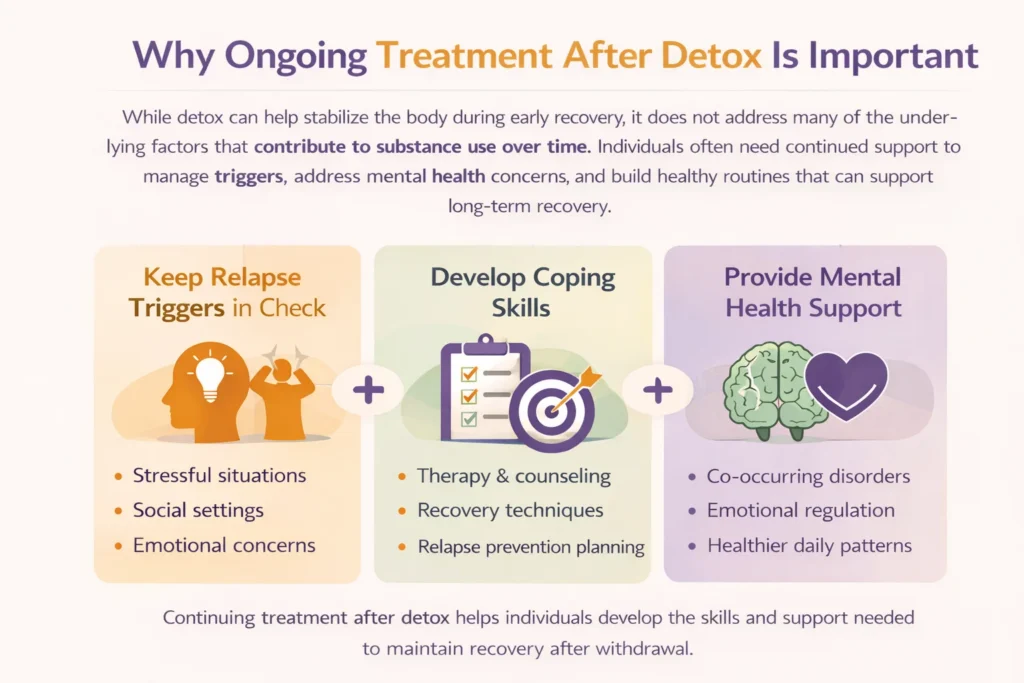
While detox can help stabilize the body during the early stages of recovery, it does not address many of the underlying factors that contribute to substance use over time. Addiction often involves a combination of behavioral patterns, emotional challenges, and environmental influences that require additional support beyond the initial withdrawal phase.
For example, individuals may continue to encounter triggers related to past substance use, including stress, social situations, or unresolved emotional concerns. Without tools to recognize and manage these triggers, the risk of returning to substance use may remain high. Ongoing treatment often focuses on helping individuals identify these patterns and develop strategies that support relapse prevention.
Continuing care may also include therapy and access to recovery support systems that help individuals strengthen coping skills, address mental health concerns, and build healthier routines. After detox, individuals often transition into rehabilitation programs to begin the therapeutic work involved in what to expect from rehab.
Frequently Asked Questions About Detox and Rehab
How long does detox usually last?
The length of detox can vary depending on the substance used, the duration of use, and a person’s overall health. In many cases, detox lasts several days to about a week while the body adjusts to functioning without substances. Some individuals may require additional monitoring if withdrawal symptoms persist.
Is detox required before entering rehab?
Detox is not always required before beginning rehabilitation. Whether detox is necessary typically depends on the substance involved and the level of physical dependence. A medical assessment can help determine if withdrawal management should occur before entering a treatment program.
What substances typically require medical detox?
Medical detox is often recommended for substances that can produce significant physical dependence or more serious withdrawal symptoms. These commonly include alcohol, opioids, and benzodiazepines. In these cases, medical supervision can help manage symptoms safely during the early stages of recovery.
What therapies are used during rehab?
Rehabilitation programs often include a range of therapeutic approaches designed to support recovery. These may include individual counseling, group therapy, behavioral therapy, and education focused on coping strategies and relapse prevention. Many programs also address mental health concerns alongside substance use.
How long do rehab programs last?
The length of rehabilitation can vary based on a person’s needs and the type of program they enter. Some programs last several weeks, while others may continue for a few months or longer. Treatment duration often depends on progress, treatment goals, and ongoing support needs.
Can detox treat addiction on its own?
Detox helps the body stabilize during withdrawal, but it does not address the underlying causes of addiction. Long-term recovery typically involves therapy, behavioral support, and strategies that help individuals manage triggers and maintain stability over time. For this reason, detox is often considered the first step before entering a rehabilitation program.
The length of detox can vary depending on the substance used, the duration of use, and a person’s overall health. In many cases, detox lasts several days to about a week while the body adjusts to functioning without substances. Some individuals may require additional monitoring if withdrawal symptoms persist.
Detox is not always required before beginning rehabilitation. Whether detox is necessary typically depends on the substance involved and the level of physical dependence. A medical assessment can help determine if withdrawal management should occur before entering a treatment program.
Medical detox is often recommended for substances that can produce significant physical dependence or more serious withdrawal symptoms. These commonly include alcohol, opioids, and benzodiazepines. In these cases, medical supervision can help manage symptoms safely during the early stages of recovery.
Rehabilitation programs often include a range of therapeutic approaches designed to support recovery. These may include individual counseling, group therapy, behavioral therapy, and education focused on coping strategies and relapse prevention. Many programs also address mental health concerns alongside substance use.
The length of rehabilitation can vary based on a person’s needs and the type of program they enter. Some programs last several weeks, while others may continue for a few months or longer. Treatment duration often depends on progress, treatment goals, and ongoing support needs.
Detox helps the body stabilize during withdrawal, but it does not address the underlying causes of addiction. Long-term recovery typically involves therapy, behavioral support, and strategies that help individuals manage triggers and maintain stability over time. For this reason, detox is often considered the first step before entering a rehabilitation program.