


Starting addiction treatment can feel uncertain, especially for people who are not familiar with how the process works. In Northern Virginia, including areas such as Fairfax, there are multiple levels of care designed to support different stages of recovery. Understanding how these stages connect can make it easier to take the first step.
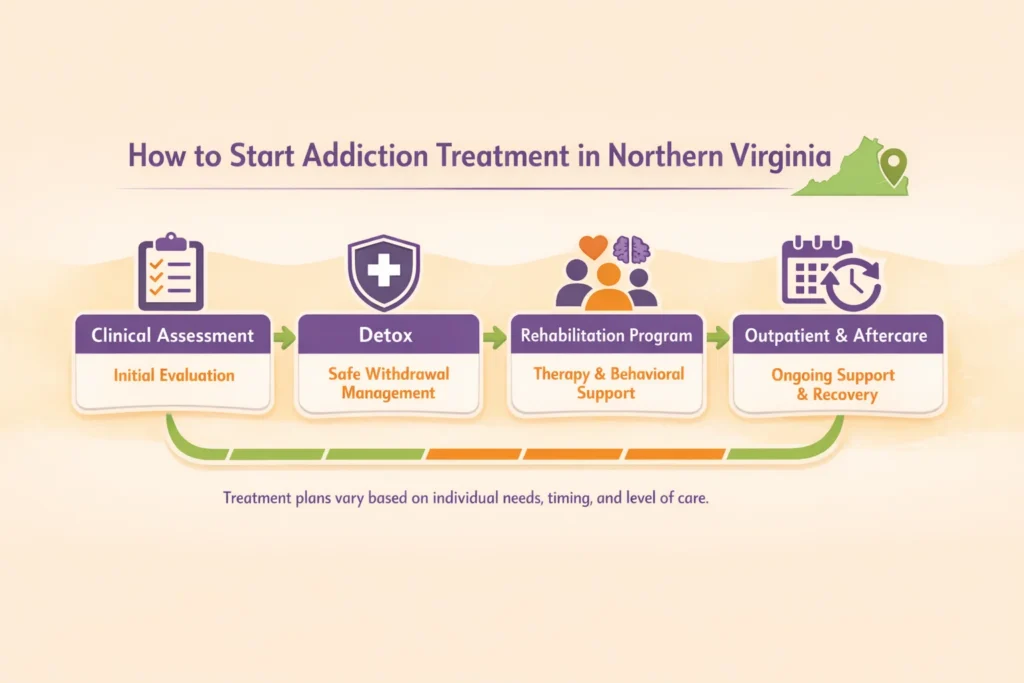
Treatment often begins with a clinical assessment to determine the most appropriate level of care, similar to how addiction treatment services are organized across Virginia. For many individuals, this is followed by detox, where withdrawal symptoms are managed in a safe and supervised setting. After stabilization, treatment may continue through a structured rehabilitation program that focuses on therapy, behavioral support, and developing coping strategies. Ongoing care, such as outpatient programs and aftercare planning, is commonly used to help maintain progress over time.
The timing and structure of treatment can vary based on individual needs and circumstances. Some people begin with a scheduled admission, while others may require more immediate access to care when symptoms or risks increase. Having a clear understanding of how treatment typically progresses can help individuals and families make informed decisions about recovery.
2. Same-Day Admission: Getting Help Quickly
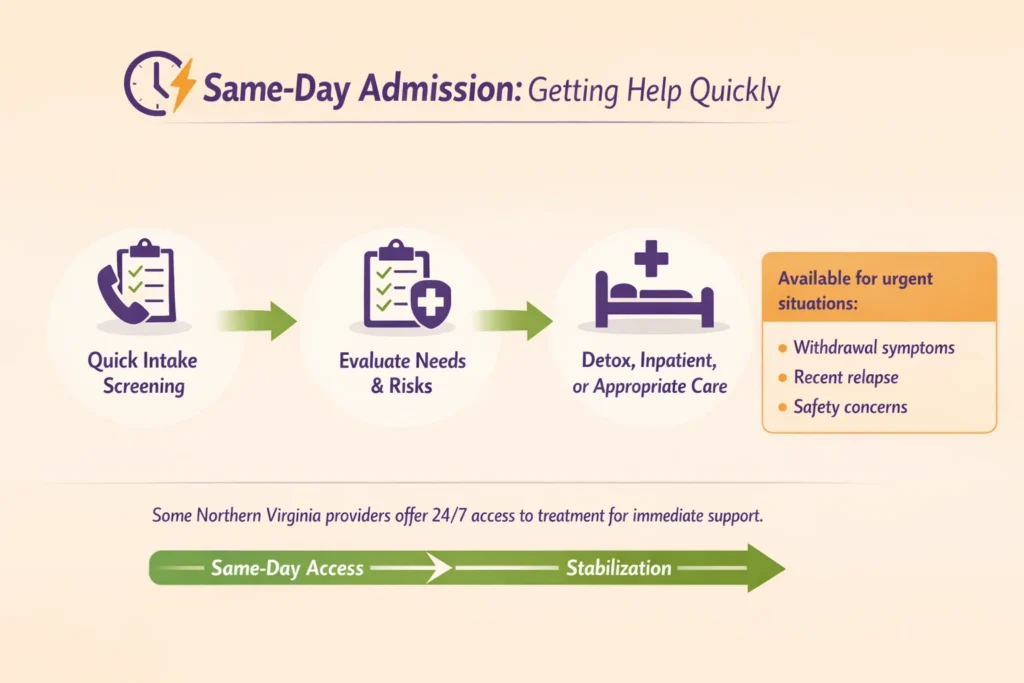
In some situations, individuals may need access to treatment without delay. Same-day admission is often used when there are immediate concerns related to substance use, including withdrawal symptoms, safety risks, or a recent escalation in use. Rather than waiting for a scheduled intake, individuals can be assessed and placed into an appropriate level of care as quickly as possible.
The process typically begins with an initial screening, followed by a more detailed clinical assessment. This helps determine whether detox, inpatient care, or another level of treatment is appropriate. Factors such as substance use history, physical health, and current symptoms are considered when making this decision.
Same-day admission may be appropriate for individuals experiencing moderate to severe withdrawal symptoms, those who have recently relapsed, or those who may be at risk without immediate support. In Northern Virginia, some treatment providers offer access to care on a 24/7 basis to accommodate these situations.
While not every case requires urgent admission, having the option available can help reduce delays in care and provide a more immediate path toward stabilization and treatment.
3. Drug & Alcohol Detox in Northern Virginia
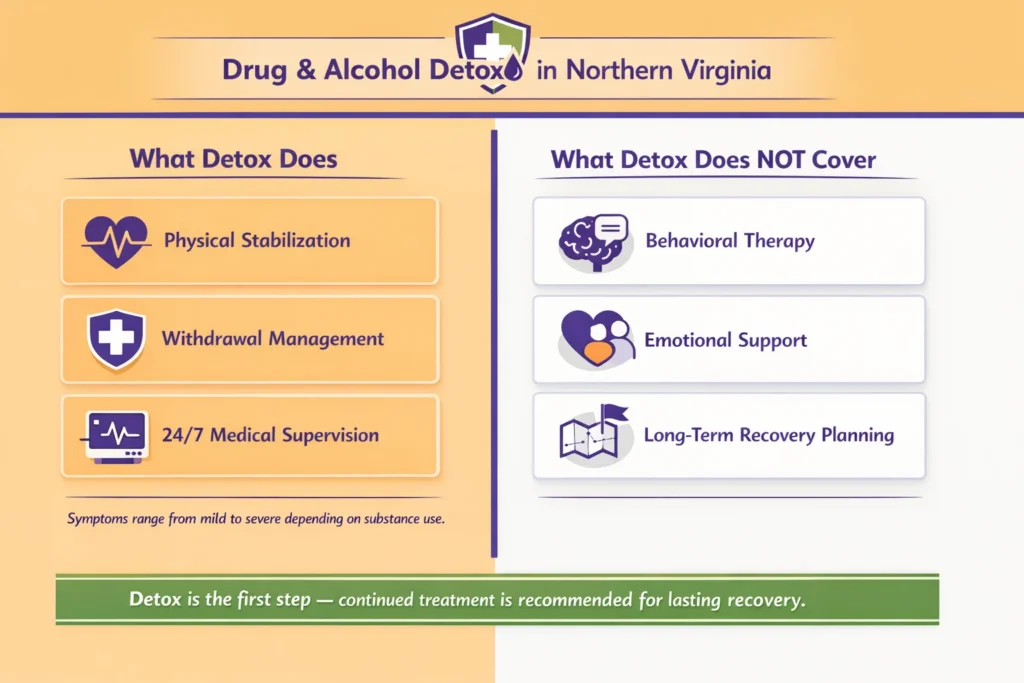
Detox is often the first step in addiction treatment, focused on helping the body safely adjust after stopping the use of drugs or alcohol. During this phase, individuals may experience withdrawal symptoms that can range from mild discomfort to more serious medical concerns, depending on the substance and level of use.
Because of these risks, detox is typically conducted in a medically supervised setting where symptoms can be monitored and managed appropriately. This level of care helps support physical stabilization while reducing potential complications during the withdrawal process. In Northern Virginia, detox programs may vary in structure, but they generally follow a clinical approach based on individual needs.
While detox is an important starting point, it is not considered complete treatment on its own. It primarily addresses the physical effects of substance use, without fully addressing the behavioral and psychological factors involved in recovery. For a more detailed explanation of how this stage fits into the broader process, see this guide on the detox process and how it differs from ongoing treatment.
After detox is complete, individuals are often recommended to continue care through inpatient or outpatient programs, where therapy, structured support, and recovery planning become the primary focus.
4. Inpatient vs Outpatient Treatment Options
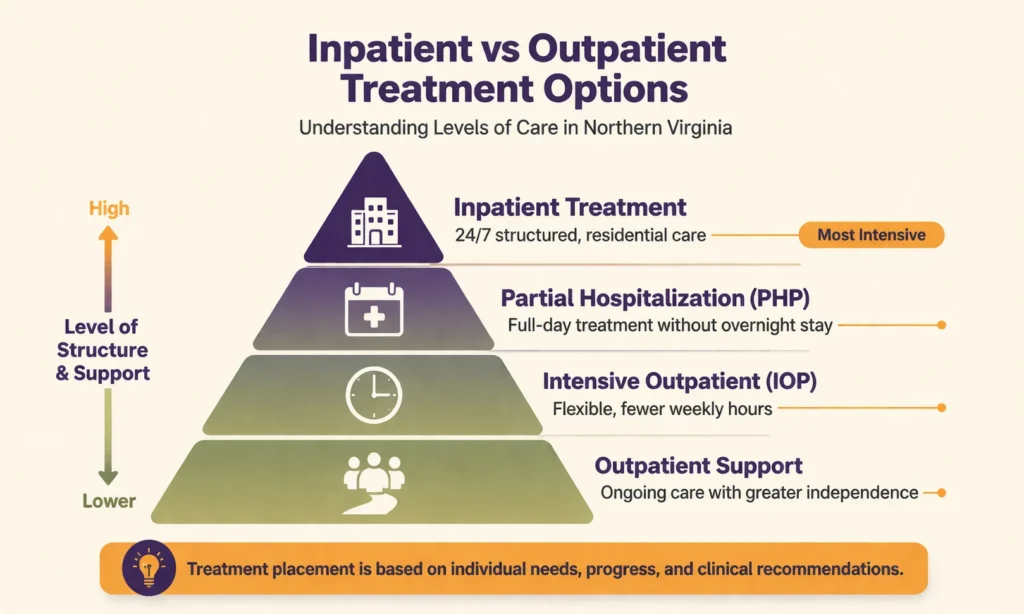
After detox, individuals may transition into different levels of care depending on their needs, progress, and overall stability. Treatment is often structured along a continuum that includes inpatient programs, as well as outpatient options such as partial hospitalization programs (PHP) and intensive outpatient programs (IOP).
Inpatient treatment provides the highest level of structure, with individuals living on-site and receiving continuous support in a controlled environment. This setting may be appropriate for those who require a more stable and supervised space during early recovery, particularly following detox or in cases where additional support is needed.
Outpatient treatment offers more flexibility while still maintaining a structured approach to care. Partial hospitalization programs typically involve several hours of treatment per day, multiple days per week, without requiring an overnight stay. Intensive outpatient programs follow a similar model but with fewer weekly hours, allowing individuals to balance treatment with other responsibilities.
For those stepping down from higher levels of care, outpatient addiction treatment in Northern Virginia can provide continued support while allowing for greater independence. More information on how these programs are structured can be found in resources outlining structured outpatient care.
Each level of care serves a different role in the recovery process, and placement is usually based on individual needs, treatment history, and clinical recommendations.
5. Dual Diagnosis & Mental Health Treatment
Substance use and mental health conditions often occur together, which can make the recovery process more complex. This combination, commonly referred to as dual diagnosis, may involve conditions such as anxiety, depression, post-traumatic stress, or other mental health concerns that influence patterns of substance use.
Because these conditions can interact with one another, treatment is often most effective when both are addressed at the same time. Integrated care focuses on identifying underlying factors, supporting emotional stability, and helping individuals develop healthier coping strategies alongside substance use treatment.
In Northern Virginia, treatment programs may incorporate a range of therapeutic approaches to support both mental health and recovery. This can include individual therapy, group counseling, and other structured interventions designed to address co-occurring conditions in a coordinated way. Additional information on how these approaches are applied can be found in resources covering dual diagnosis treatment programs.
Addressing both substance use and mental health needs together can help support more stable progress during treatment and reduce the risk of challenges that may arise when one condition is treated without the other.
6. Trauma-Informed Care in Recovery
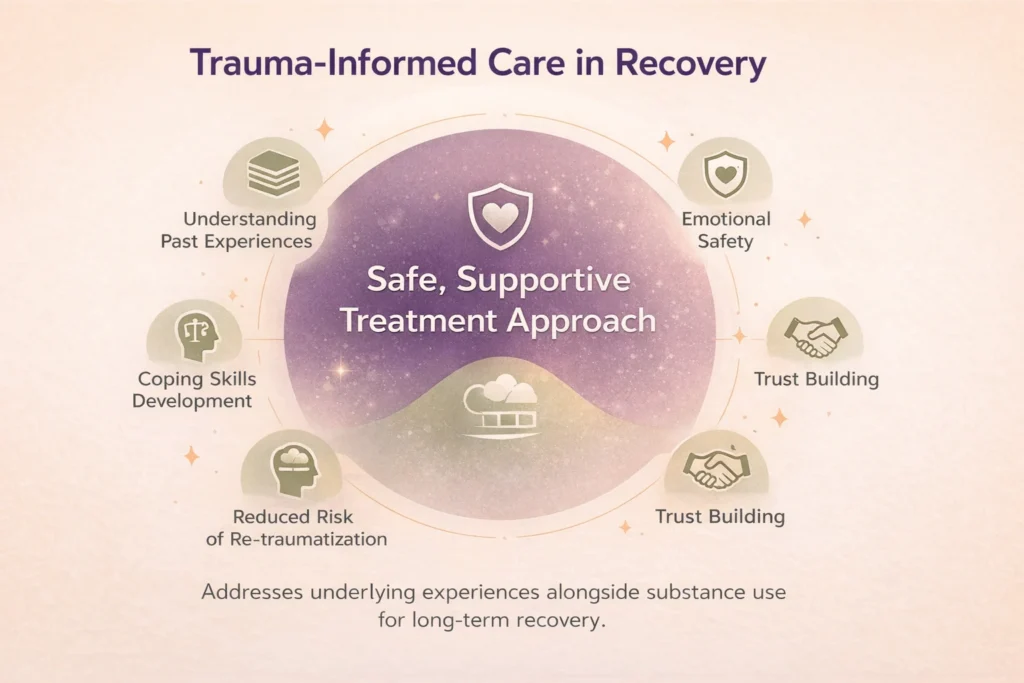
Trauma-informed care is an approach to treatment that recognizes the impact past experiences may have on substance use and recovery. Many individuals entering treatment have experienced some form of trauma, which can influence emotional responses, coping patterns, and overall well-being.
Rather than focusing only on substance use, trauma-informed care takes a broader view of each individual’s history and needs. This approach emphasizes creating a safe and supportive environment, where individuals can engage in treatment without feeling overwhelmed or retraumatized.
In practice, this may involve adapting therapeutic methods, building trust over time, and helping individuals develop healthier ways to manage stress and emotional triggers. By addressing underlying experiences alongside substance use, trauma-informed care can support more stable and sustainable progress throughout the recovery process.
7. Relapse Prevention & Aftercare
Recovery does not end after completing a structured treatment program. Ongoing support is often an important part of maintaining progress and reducing the risk of relapse over time. Relapse prevention and aftercare planning are typically introduced during treatment and continue after a higher level of care has been completed.
Relapse prevention focuses on helping individuals recognize triggers, manage stress, and respond to challenging situations in healthier ways. This may involve continued therapy, skill-building, and developing routines that support stability in daily life. Many programs also encourage participation in peer support groups or community-based resources, which can provide additional structure and accountability.
Aftercare plans are usually tailored to individual needs and may include outpatient therapy, support groups, or other forms of continued care. These approaches are designed to help individuals stay engaged in recovery while gradually increasing independence.
Additional information on ongoing recovery support and community-based services in the region can be found through resources such as the Fairfax County Community Services Board substance use disorder programs.
8. Understanding the Addiction Treatment Process in Northern Virginia
Addiction treatment is often a step-by-step process that involves multiple stages of care, each designed to support different aspects of recovery. From detox and inpatient programs to outpatient care and aftercare planning, each phase plays a role in helping individuals build stability and maintain long-term progress.
The appropriate starting point and path through treatment can vary depending on individual needs, substance use history, and overall health. Some individuals may begin with immediate access to care, while others follow a more gradual and structured entry into treatment. In either case, having a clear understanding of how these stages connect can make the process feel more manageable.
Support is available at each stage of recovery, and ongoing care can help reinforce the progress made during treatment. By approaching recovery as a continuous process rather than a single step, individuals and families can make more informed decisions and stay engaged over time.