


Private alcohol detox refers to medically supervised withdrawal management provided in a clinical setting. These programs are designed to monitor and manage withdrawal symptoms while the body adjusts to the absence of alcohol.
Detox services are typically provided by licensed medical facilities, specialized withdrawal management centers, or hospitals. These settings focus on short-term medical stabilization during the acute withdrawal phase, when symptoms are most likely to intensify.
In Northern Virginia, detox and substance use treatment facilities operate under licensing standards established by the Virginia Department of Behavioral Health and Developmental Services, which help ensure appropriate clinical oversight and patient safety.
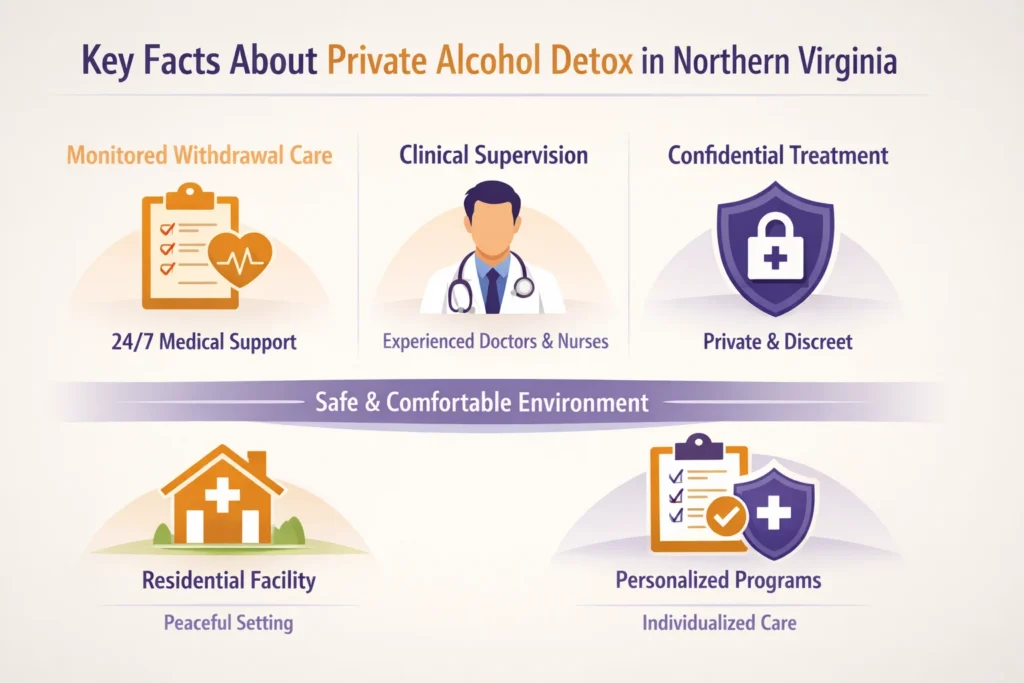
Private detox environments may include features such as:
- Lower client-to-staff ratios
- Individual medical evaluations
- Confidential admissions procedures
- Residential-style accommodations
Medical supervision is important because alcohol withdrawal can escalate quickly depending on several factors, including the duration of alcohol use, overall health status, and any prior history of withdrawal complications. In many cases, individuals begin recovery with medically supervised detox before transitioning into ongoing therapy and recovery support.
Behavioral health providers that offer addiction treatment may collaborate with detox facilities when withdrawal management is necessary, helping individuals transition safely from medical stabilization into ongoing therapy and recovery support.
2. Alcohol Withdrawal Can Present Serious Health Risks
Alcohol suppresses activity in the central nervous system. When alcohol use stops abruptly, the brain can become hyperactive as it attempts to regain balance, resulting in withdrawal symptoms.
Withdrawal symptoms can range from mild to severe. Medical references such as the MedlinePlus overview of alcohol withdrawal note that symptoms may include tremors, anxiety, nausea, seizures, and delirium tremens in more severe cases.
Common symptoms include:
- Anxiety and restlessness
- Tremors
- Elevated heart rate
- Nausea
- Sweating
More severe cases may involve:
- Seizures
- Hallucinations
- Delirium tremens (DTs)
Because of these risks, medically supervised detox is widely regarded as the safest approach for individuals with moderate to severe alcohol dependence.
When Alcohol Detox May Be Recommended
Some individuals may require medically supervised withdrawal management before beginning therapy-based addiction treatment. This is more common when certain risk factors are present.
Alcohol detox may be recommended when:
- Alcohol use has been heavy or long-term
- Previous withdrawal symptoms have occurred
- Seizures or delirium tremens have developed during past withdrawal
- Underlying medical conditions increase withdrawal risk
A clinical evaluation can help determine whether medically supervised detox is the safest starting point before beginning ongoing addiction treatment.
3. The Alcohol Detox Timeline
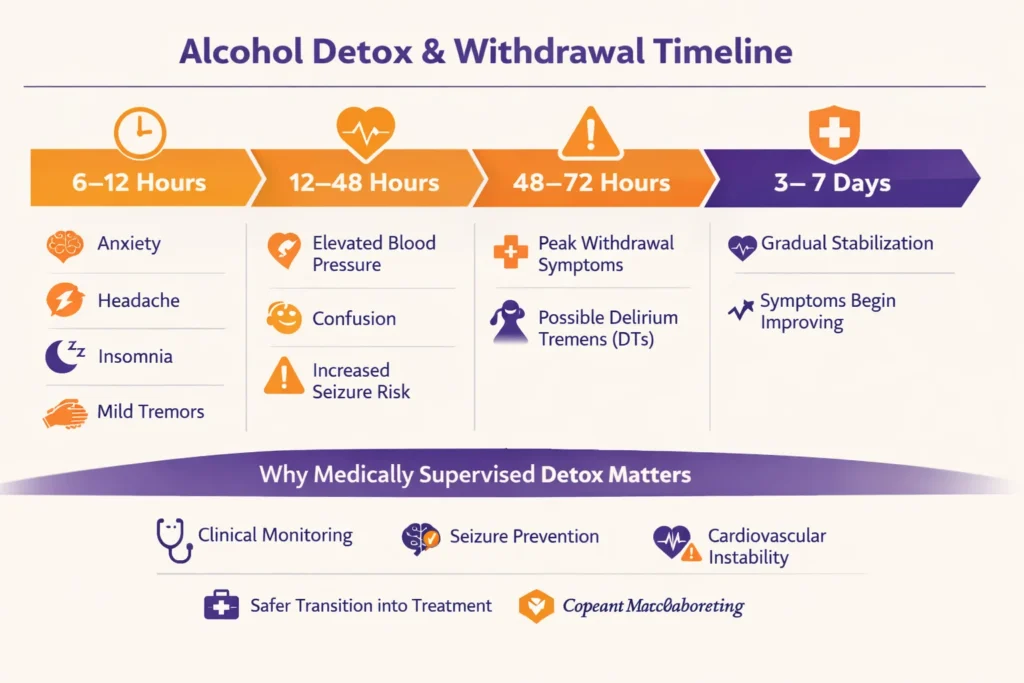
Alcohol withdrawal follows a general clinical timeline, though the severity of alcohol withdrawal symptoms can vary based on duration of use, overall health, and level of physical dependence.
6–12 Hours After Last Drink
- Anxiety
- Headache
- Insomnia
- Mild tremors
12–48 Hours
- Elevated blood pressure
- Confusion
- Increased seizure risk
48–72 Hours
- Peak withdrawal symptoms
- Possible onset of delirium tremens (DTs) in severe cases
3–7 Days
- Gradual neurological stabilization
- Reduction in acute physical symptoms
The Virginia Department of Health (VDH) emphasizes the importance of medically supervised withdrawal management due to the potential for seizures, cardiovascular instability, and other serious complications during alcohol detox. Clinical monitoring helps reduce risk and support safe stabilization.
4. Medications Commonly Used in Alcohol Detox
Private detox programs in Northern Virginia often incorporate medication-assisted treatment to reduce withdrawal severity and prevent complications.
Commonly used medications may include:
- Benzodiazepines to reduce seizure risk
- Anticonvulsants
- Beta-blockers for heart rate stabilization
- Nutritional supplementation, including thiamine
Medication protocols are determined after medical evaluation and are designed to improve safety and comfort during detox.
In some cases, clinical indicators may suggest the need for structured monitoring, similar to what is described in clinical signs that supervised alcohol detox is needed. Medication protocols are determined by medical professionals based on individual health factors and withdrawal severity. Before beginning detox, individuals typically undergo a clinical assessment to evaluate withdrawal risk and determine the appropriate level of care.
5. Privacy and Confidentiality in Northern Virginia
Northern Virginia is home to many professionals working in government, healthcare, technology, and corporate leadership roles. As a result, confidentiality is often a central consideration in treatment settings.
Private alcohol detox programs typically maintain:
- HIPAA-compliant records
- Discreet intake procedures
- Limited residential capacity
- Private accommodations
Federal patient privacy protections are outlined by the U.S. Department of Health & Human Services HIPAA guidelines.
Confidential treatment environments can reduce stigma-related concerns and allow stabilization to occur in a secure setting.
6. How Private Detox Differs From Hospital Detox
While hospitals may provide emergency stabilization for acute withdrawal, private detox centers are generally designed specifically for substance withdrawal management.
Differences may include:
- Residential-style settings rather than emergency departments
- Addiction-focused medical teams
- Structured daily routines
- Integrated transition planning into continued care
Many individuals transition from detox into structured treatment such as alcohol rehab programs in Northern Virginia following medical stabilization.
Detox programs in Northern Virginia may incorporate medication-assisted treatment to reduce withdrawal severity.
7. Detox Is Only the First Step in Alcohol Recovery
Detox addresses the physical dependence on alcohol but does not resolve underlying psychological or behavioral factors associated with substance use.
Long-term recovery typically involves:
- Individual therapy
- Group counseling
- Behavioral therapy
- Relapse prevention planning
- Treatment for co-occurring mental health conditions
Long-term recovery may also include therapy and support for co-occurring mental health conditions through dual diagnosis treatment.
Understanding Private Alcohol Detox in Northern Virginia
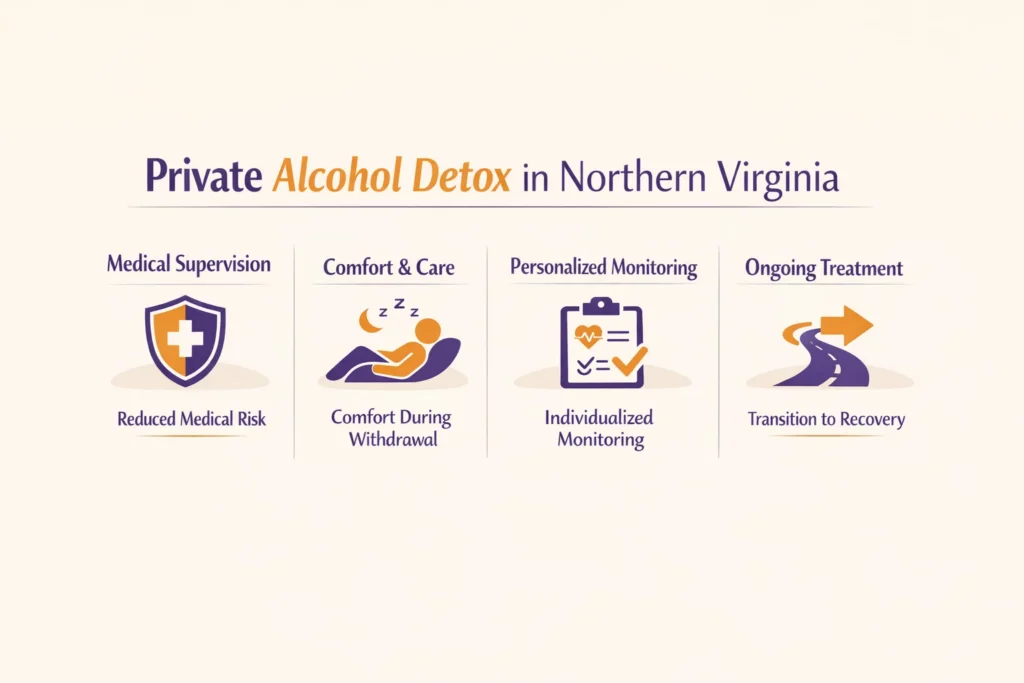
Private alcohol detox in Northern Virginia provides medically supervised withdrawal management within a confidential and structured setting. These programs are designed to:
- Reduce medical risk
- Improve comfort during withdrawal
- Provide individualized monitoring
- Support transition into continued care
With appropriate medical oversight and continuity planning, detox can serve as the first stage in a comprehensive recovery pathway.
By focusing on safety, stabilization, and structured care, private detox programs play an important role in addressing alcohol dependence within Northern Virginia’s healthcare landscape. After detox, many individuals continue recovery through structured addiction treatment programs that address behavioral, psychological, and emotional aspects of alcohol use.
Frequently Asked Questions About Private Alcohol Detox in Northern Virginia
Is alcohol detox dangerous without medical supervision?
Alcohol withdrawal can pose serious health risks for some individuals. Symptoms may range from anxiety and tremors to seizures or delirium tremens in more severe cases. Because complications can develop quickly, medical supervision is often recommended for individuals with moderate to severe alcohol dependence.
What happens after alcohol detox?
Detox focuses on stabilizing the body during withdrawal but does not address the psychological or behavioral factors associated with alcohol use. After detox, many individuals continue recovery through structured addiction treatment programs that may include therapy, counseling, relapse prevention planning, and support for co-occurring mental health conditions.
Do all people who stop drinking need medical detox?
Not everyone requires medically supervised detox. The need for detox depends on several factors, including the severity of alcohol dependence, past withdrawal experiences, and underlying medical conditions. A clinical evaluation can help determine whether medically supervised withdrawal management is necessary before beginning ongoing treatment.
Can treatment providers help coordinate detox services?
Behavioral health providers that offer addiction treatment may help individuals determine the appropriate level of care and coordinate referrals to licensed detox facilities when withdrawal management is needed. This approach can help ensure a safe transition from medical stabilization into ongoing recovery support.
Alcohol withdrawal can pose serious health risks for some individuals. Symptoms may range from anxiety and tremors to seizures or delirium tremens in more severe cases. Because complications can develop quickly, medical supervision is often recommended for individuals with moderate to severe alcohol dependence.
Detox focuses on stabilizing the body during withdrawal but does not address the psychological or behavioral factors associated with alcohol use. After detox, many individuals continue recovery through structured addiction treatment programs that may include therapy, counseling, relapse prevention planning, and support for co-occurring mental health conditions.
Not everyone requires medically supervised detox. The need for detox depends on several factors, including the severity of alcohol dependence, past withdrawal experiences, and underlying medical conditions. A clinical evaluation can help determine whether medically supervised withdrawal management is necessary before beginning ongoing treatment.
Behavioral health providers that offer addiction treatment may help individuals determine the appropriate level of care and coordinate referrals to licensed detox facilities when withdrawal management is needed. This approach can help ensure a safe transition from medical stabilization into ongoing recovery support.
Sources:
Alcohol Withdrawal: https://medlineplus.gov/ency/article/000764.htm