


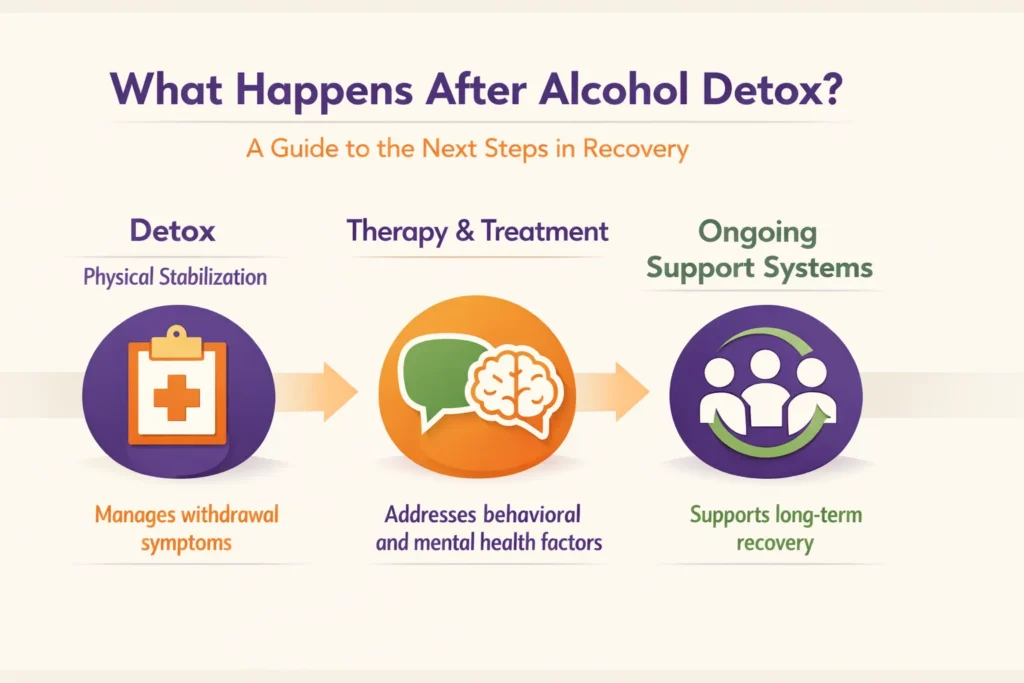
Alcohol detox is often the first stage in addressing alcohol dependence, focusing on short-term physical stabilization as the body adjusts to the absence of alcohol. In Virginia, substance use treatment providers operate within standards outlined by the Virginia Department of Behavioral Health and Developmental Services (DBHDS), which establish clinical and safety guidelines for withdrawal management and ongoing care.
During this phase, the primary goal is to manage withdrawal symptoms safely and support medical stability. However, detox alone does not address the underlying behavioral, psychological, and emotional factors associated with alcohol use.
Following detox, individuals may transition into a range of ongoing care options designed to support long-term recovery. These next steps can include structured treatment programs, therapy, and continued support tailored to individual needs and circumstances. Understanding what happens after detox can help individuals and families make informed decisions about the recovery process and the types of care that may be appropriate moving forward.
Why Detox Alone Is Not Considered Full Treatment
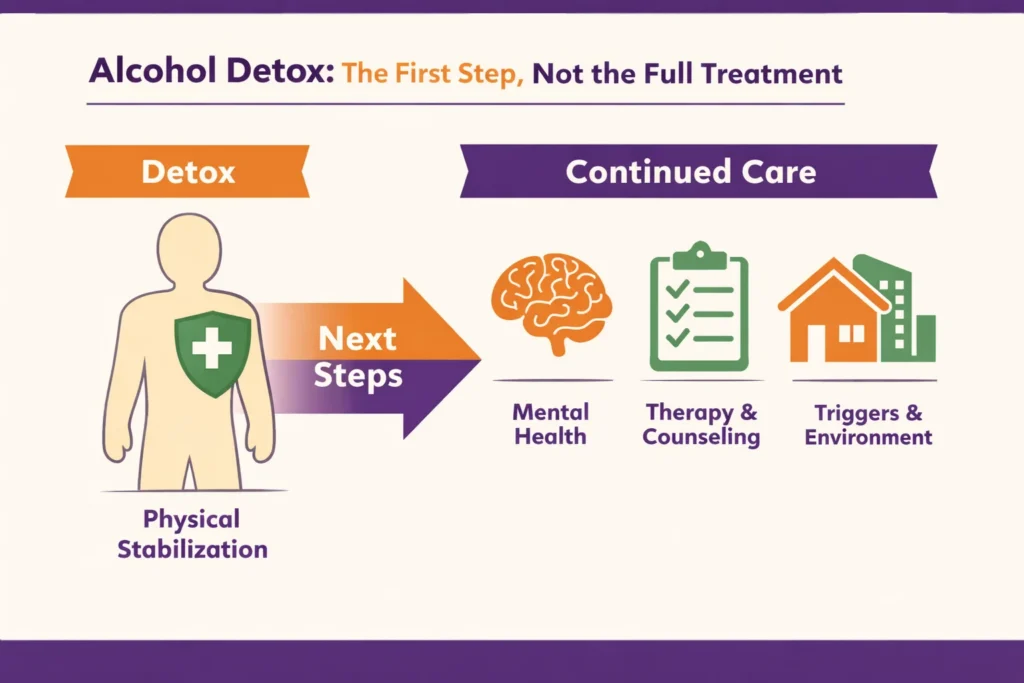
Detox is designed to address the physical effects of alcohol dependence, particularly the symptoms that occur when someone stops drinking. This stage focuses on stabilizing the body during withdrawal and reducing immediate health risks.
Clinical sources generally describe detox as an initial step in the recovery process, rather than a complete form of treatment, with distinctions often made between detox and ongoing care, such as rehabilitation, in discussions about the difference between detox and rehab.
While detox can help individuals safely manage withdrawal, it does not address the underlying factors that contribute to alcohol use. These may include behavioral patterns, psychological drivers such as stress or co-occurring mental health conditions, and environmental triggers that influence substance use. Without addressing these components, the risk of returning to alcohol use may remain higher.
For this reason, continued care is often considered an important part of the recovery process. Ongoing support may involve therapeutic interventions, structured programs, and strategies that help individuals better understand and manage the factors associated with alcohol use over time.
Common Next Steps After Alcohol Detox
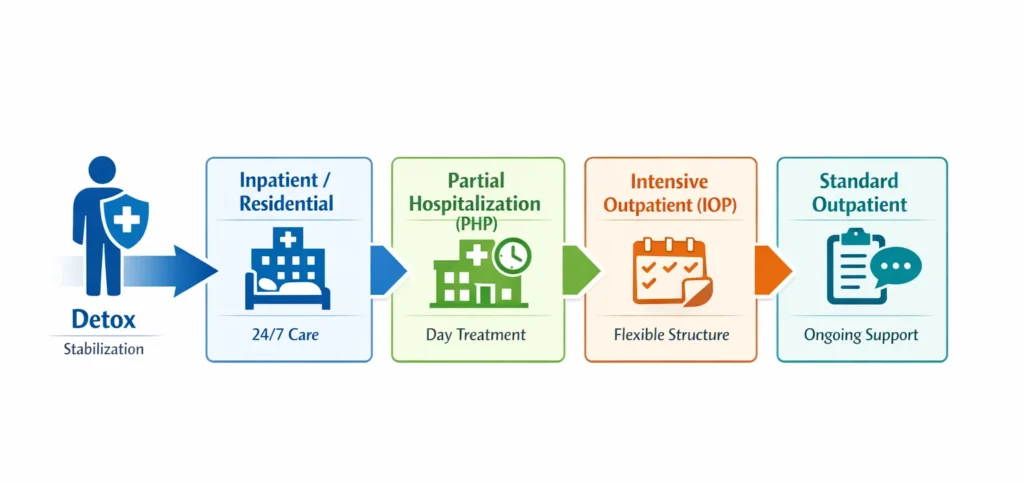
After completing detox in a licensed medical setting, individuals may transition into different levels of care depending on their needs. The appropriate next step is often based on factors such as the severity of alcohol use, overall health, and the presence of any co-occurring mental health conditions.
Inpatient or Residential Treatment
Inpatient or residential treatment programs provide a structured, live-in environment where individuals receive 24-hour support. These settings are often used for those who may benefit from a higher level of care, particularly when additional medical monitoring or a stable, substance-free environment is needed. Daily schedules typically include therapy, counseling, and recovery-focused activities.
Partial Hospitalization Programs (PHP)
Partial hospitalization programs offer a high level of clinical care while allowing individuals to return home or to a supportive living environment at the end of the day. These programs usually involve several hours of structured treatment per day, including therapy and medical oversight, without requiring overnight stays.
Intensive Outpatient Programs (IOP)
Intensive outpatient programs provide a more flexible treatment option, with multiple therapy sessions scheduled throughout the week. This level of care may be appropriate for individuals who have completed higher levels of treatment or who require ongoing support while maintaining work, school, or family responsibilities.
Standard Outpatient Care
Standard outpatient care represents a lower-intensity level of support, typically involving scheduled therapy sessions on a weekly or periodic basis. This approach may be appropriate for individuals who have progressed through more structured levels of care or who require ongoing support while maintaining daily responsibilities. Outpatient care often focuses on relapse prevention, coping strategies, and continued accountability over time.
The Role of Therapy in Ongoing Recovery
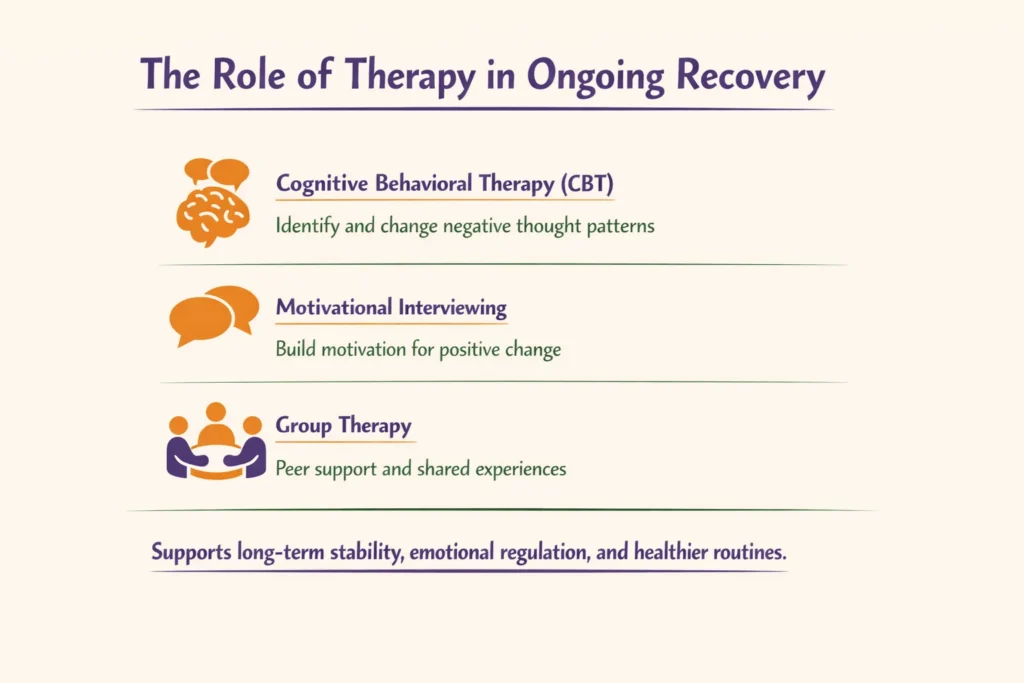
Therapy is widely recognized as a core component of ongoing recovery and is commonly integrated across different levels of care. While detox focuses on physical stabilization, therapeutic approaches are used to address the underlying patterns and factors associated with substance use. These approaches are commonly used in addiction treatment programs to help individuals better understand their behaviors, develop coping strategies, and build skills that support long-term stability.
Several evidence-based modalities are frequently incorporated into treatment. Cognitive behavioral therapy (CBT) focuses on identifying and changing unhelpful thought patterns that may contribute to substance use. Motivational interviewing is a collaborative approach that helps individuals explore and strengthen their motivation for change. Group therapy provides a structured setting where individuals can share experiences, build peer support, and develop interpersonal skills.
These therapeutic approaches may be adapted based on individual needs and are often used in combination to support different aspects of recovery. Over time, therapy can help individuals recognize triggers, improve emotional regulation, and establish healthier routines that contribute to sustained recovery.
Addressing Co-Occurring Mental Health Conditions
Some individuals experience both substance use and mental health conditions at the same time, a combination often referred to as dual diagnosis. These conditions may include anxiety, depression, trauma-related disorders, or other mental health concerns that can influence patterns of substance use. When both are present, each condition can interact with and potentially intensify the other, making recovery more complex.
Because of this overlap, integrated care approaches are commonly emphasized in behavioral health settings. These approaches are designed to address both substance use and mental health conditions together, rather than treating them separately. This may involve coordinated therapeutic strategies, ongoing assessment, and adjustments to care based on individual needs.
In many cases, individuals with co-occurring conditions may benefit from structured approaches such as dual diagnosis treatment, which are designed to support both aspects of health within a unified care framework. Addressing both substance use and mental health factors together is generally considered an important component of long-term recovery planning.
Medications That May Be Used After Detox
In some cases, medications may be prescribed following detox to support ongoing recovery and help reduce the risk of returning to alcohol use. These medications are often used as part of a broader treatment approach that includes therapy and behavioral support.
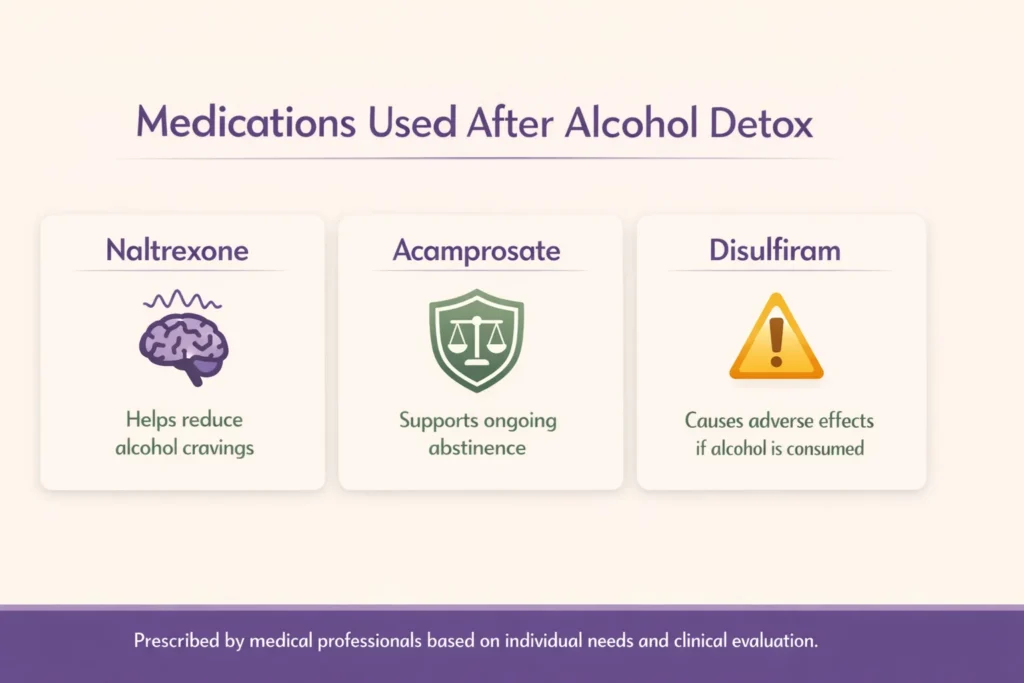
Common examples include naltrexone, which may help reduce alcohol cravings, acamprosate, which is sometimes used to support continued abstinence, and disulfiram, which produces unpleasant effects if alcohol is consumed. These are among the medications used in the treatment of alcohol use disorder, each working differently based on individual needs.
Prescribing decisions are made by licensed medical professionals following a clinical evaluation. Factors such as overall health, history of alcohol use, and any co-occurring conditions are typically considered when determining whether medication may be appropriate as part of an ongoing care plan.
Building a Support System After Detox
Support systems can play an important role in the recovery process following detox. While clinical care addresses many aspects of substance use, ongoing support from peers, family, and structured environments can help reinforce stability over time, sometimes alongside structured outpatient care.
Peer support groups, such as 12-step programs or alternative recovery communities, provide opportunities to connect with others who share similar experiences. These settings often encourage accountability, shared understanding, and continued engagement in recovery-focused activities. Family involvement may also be beneficial, as supportive relationships can help create a more stable and encouraging environment.
In addition, sober living environments or substance-free settings may help reduce exposure to triggers and provide a structured space for continued recovery. Together, these forms of support can complement formal treatment approaches and contribute to long-term recovery efforts.
How Long Does Treatment After Detox Last?
The duration of treatment after detox can vary widely depending on individual needs and circumstances. Duration varies based on individual factors such as the severity of alcohol use, overall health, the presence of co-occurring mental health conditions, and the level of support available.
Some individuals may participate in more structured levels of care for several weeks, while others may transition more quickly into lower-intensity support. In many cases, recovery is viewed as an ongoing process that may involve different phases of care over time, rather than a single, fixed timeline.
Because recovery experiences differ, treatment plans are often adjusted as needs change. Ongoing evaluation and flexibility can help ensure that individuals receive appropriate support at each stage, whether through structured programs, therapy, or community-based resources.
Transitioning From Detox to Ongoing Care
Discharge planning from detox providers often includes recommendations for continued care based on an individual’s clinical needs and overall health status. Because detox focuses on short-term stabilization, additional support is typically considered to address the behavioral and psychological aspects of recovery.
Individuals may be referred to appropriate programs or providers depending on factors such as the severity of substance use, prior treatment history, and the presence of co-occurring conditions. These recommendations can help guide the next phase of care in a way that aligns with each person’s circumstances.
Care coordination can help support continuity between levels of care, reducing gaps in support during the transition process. By maintaining a structured and informed approach, individuals may be better positioned to continue building stability as they move beyond the initial detox phase.
What to Expect After Alcohol Detox
Alcohol detox is often an important first step in addressing alcohol dependence, focusing on physical stabilization during withdrawal. However, recovery typically extends beyond this initial phase. Ongoing care is designed to address the broader behavioral, psychological, and environmental factors associated with substance use, which are not resolved through detox alone.
Because recovery needs can vary, individuals may move through different levels of care and support over time. Therapeutic approaches, structured programs, and support systems can all play a role in helping individuals maintain progress. Understanding the distinction between detox and continued care can provide a clearer picture of how recovery is approached as a longer-term, multi-stage process.